This article originally appeared in my Forbes column.
Recently, I’ve noticed that everyday etiquette just isn’t what it used to be. Call me old-fashioned, but I sometimes find myself missing aspects of society before smartphones, digital communications, and AI became so central to our lives. Although incredibly convenient, our devices have in many ways, stolen a huge chunk of our attention, which could otherwise be directed toward human relationships.
In a world full of distributed workforces, digital asynchronous communications, and long commutes where we isolate ourselves with noise canceling headphones and doomscrolling instead of conversing with each other, the art of exercising courtesy, consideration, and care seems to be on the decline, especially in our AI-driven, digital age.
“Remote work has stripped away all the small in-person gestures that used to do a lot of the heavy lifting to build relationships,” says Nick Leighton, etiquette expert at Were You Raised By Wolves?. “The nod in the hallway, the quick hello in the elevator, the light chat at the coffee machine. Now we’re all just typing into the ether and assuming the other person knows us.”
Our attachment to our devices and screens isn’t helping either. According to the Pew Research Center, nine-in-ten U.S. adults use the internet daily, including 41% who say they’re online almost constantly. Globally, in 2025, the average person spends nearly seven hours on screens every single day. You can bet that our device habits are affecting our ability to interact as appropriately with others.
“Everyone’s reliance and constant use of our phones is definitely part of the equation,” says Harvind Singh, president & CEO at SINGH + Associates, Inc. “I’m seeing even less human interaction when people are sitting together. The art of conversation and the courtesy that comes with it is slowly being lost.”
So we’re certainly facing some headwinds working against everyday human etiquette. But the good news is that making even small, polite gestures can help you build a stronger personal brand, create more positive professional impressions, and foster stronger relationships.
In My Article:
- 1. Put Your Phone Away
- 2. Look At Your Camera, Not Your Screen
- 3. Arrive Early
- 4. Use The Person’s Name
- 5. Remember Details
- 6. Share A Handwritten Note
- 7. Engage In Genuine Conversation
- 8. Follow Through With Thoughtful Specificity
- 9. Say Thank You
- 10. Share A Compliment
1. Put Your Phone Away

Photo credit: Brooke Cagle
Too often these days, a smartphone can feel like the uninvited extra guest butting into a conversation you’re trying to have with someone. It goes without saying that you should always have your ringer off when you’re with someone unless you’ve communicated a good reason for leaving it on. However, just putting your phone on silent may not be enough.
Research has shown that the mere presence of a smartphone, even if face down or turned off, can distract you and adversely affect your concentration. With all the notifications, alerts, and message prompts continuously flooding us with hits of bite-sized information, it’s no wonder we’re all struggling to maintain our attention on any one thing or person in this digital age.
“People are overwhelmed with information and increasingly tight deadlines. Workers are finding it harder to focus on one task at a time, so it’s not surprising they may start checking their phones during a conversation without even realizing it,” says Megan Sweeney, public relations director at the American Staffing Association. However, she adds, “Checking your phone or computer while someone is talking lets the other person know you’re not their priority.”
Therefore, you really have to put your phone completely away and out of sight to be present with someone and signal you’re fully focused on them when you’re speaking with each other. “When I worked in an office, I would challenge myself to put down the phone and turn around and face the person,” says Sarah Noll Wilson, president and founder of The Noll Wilson Group. She says your phone etiquette can signal your overall attentiveness toward others. “Trust isn’t built in grand gestures. It’s built in these really micro moments of conversation.”
Action: The next time you’re with someone, put your phone completely out of sight so it can also be out of mind, both for you and for the person you’re with.
2. Look At Your Camera, Not Your Screen

Photo credit: LinkedIn Sales Solutions
You’ve probably experienced the frustration of trying to talk with someone a networking event only to notice their eyes wandering around the room. While there are certainly cultural, nuances to this, people generally appreciate your eye contact when they’re speaking to you. No one expects the experience of being on a Zoom or Teams call to completely match that of a face-to-face conversation. In fact, we’re all probably desensitized to the lack of eye contact on virtual calls, but it’s certainly nice when someone seems to be laser focused on you.
Not looking at your camera and looking at the other person on screen when you’re speaking or listening during virtual calls results in them interpreting this as you looking away or even multitasking. “Speaking only to a little black dot on your [computer] takes some getting used to,” says Paul Falcone, principal consultant at Paul Falcone Workplace Leadership Consulting. “But your eye contact is much more sincere and welcomed by the recipients on the other end of the line.”
We’ve all heard of poor in-person presence adversely affecting someone’s career. Poor digital presence during virtual meetings is also a sign of disengagement and disrespect. Don’t give people a reason to believe you’re multitasking even if you’re not.
Action: On your next virtual call, look directly at your webcam instead of the video of the person on your screen. It feels strange at first, but if you can get the hang of it, the person on the other end will likely feel more connected to you.
3. Arrive Early

Photo credit: Rodeo Project Management
I hate being late to meetings. Being punctual was something drilled into my head quite early on in my life. I can’t remember my mother ever being late to any of our school events or performances. On the other hand, I certainly can remember my father being late to many things. People running late has since been a huge pet peeve of mine. In my line of work as a public speaker, being late to an engagement would be a major breach of professionalism, letting my client and audience down, so punctuality is non-negotiable for me.
Real-time, always-on portable device communication has enabled us to make last minute changes in real-time, informing people we’re running behind or experiencing unexpected delays. However, with so many people now developing a habit around sending last minute meeting changes, just being on time can signal your professionalism.
“Repeatedly bumping meetings tells the person they’re not important enough —especially team member 1:1s being moved or rain-checked by their manager,” says Clare Haynes, a conversations specialist at Wildfire. “Leaders can argue that it’s ‘business-imperative,’ but it actually destroys discretionary effort over time.”
Action: The next time you meet someone, get there a few minutes early. This way, you can spend those first moments with them focused on connecting over the topic at hand rather than explaining why you’re late.
4. Use The Person’s Name

Photo credit: Vitaly Gariev
Whenever I pick up or drop off our daughter at school, I inevitably bump into fellow parents of her classmates. Although everyone knows everyone’s first names, I was just telling my wife that I feel like people almost never call me by name. In fact, it’s so rare to the point where I do a double take when someone actually says “Joseph” when speaking to me, either in social or professional settings. I know people have a lot on their minds. I know people forget names. I certainly do. So I never expect it. But when people do use my name, I do appreciate it.
Just using someone’s first name in conversation can create a stronger connection with them. “Use the other person’s name. And use it frequently. It creates an immediate personal connection, and demonstrates attention, recognition and acknowledgement, while creating a culture of respect,” says Jo Hayes, founder and etiquette expert at EtiquetteExpert.Org. “Using the other person’s name, several times, in the first conversation, will also imprint their name in your own memory.”
Action: When you bump into someone you know, use their name when you greet them. Or, after meeting someone for the first time, use their name when parting ways. It’s a small gesture, but it makes people feel more connected and noticed.
5. Remember Details

Photo credit: Vitaly Gariev
The other day, a client of mine remembered my daughter’s name, age, and even one of her hobbies. I know a lot of people have a lot of things on their mind, so I certainly never expect others to remember any details about me, my life, or my family, but when they do, I definitely appreciate it.
“Showing a respectful curiosity about the lives of your colleagues and remembering those details” is so important according to Ryan McKiernan, managing director at Fat Macy’s Foundation. “Simple gestures like wishing a colleague happy birthday or remembering the names of their children goes a long way to building solid relationships.”
Action: The next time you finish meeting someone, capture a couple notes about themin your Notes or Contacts app. It could be a life event, family member’s name, child’s age, pet, hobby, favorite cuisine, go-to drink, work projects, struggle, or success. Then, remind yourself of these things before you see them next.
6. Share A Handwritten Note
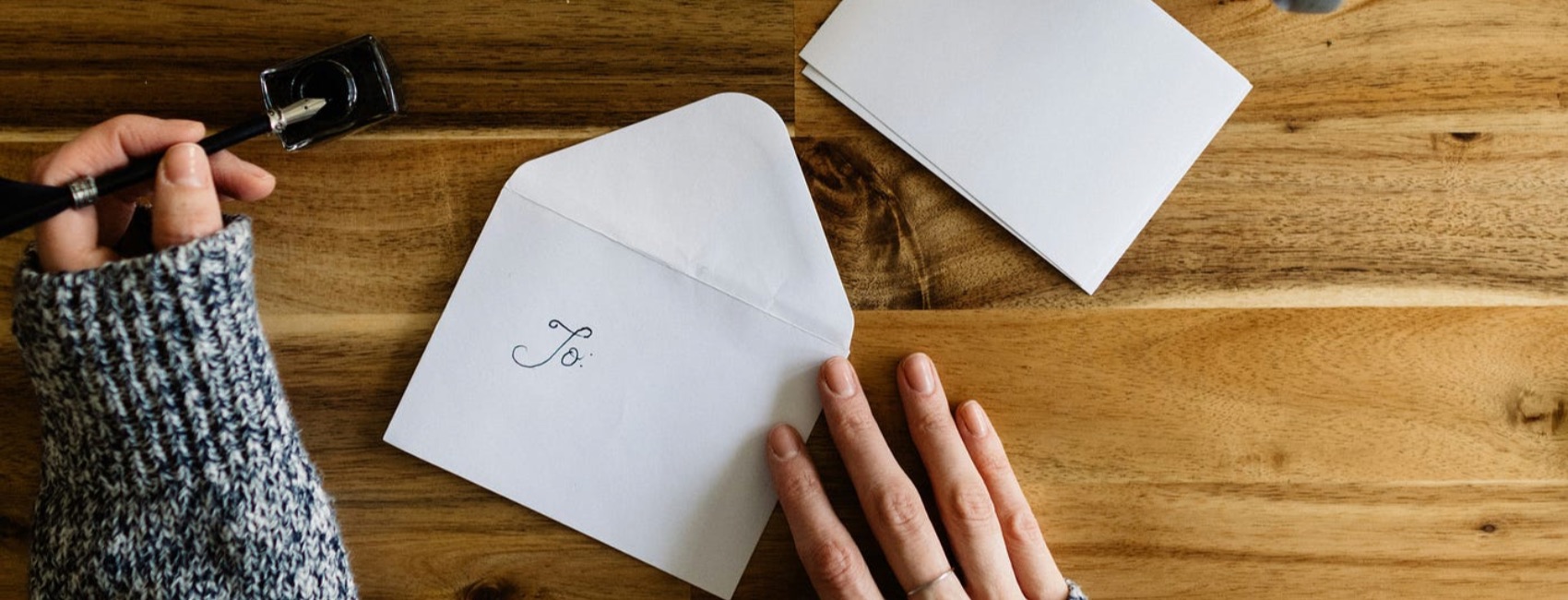
Photo credit: Kelly Sikkema
When was the last time you got a hand-written card in the mail from a job candidate who just interviewed with you? Or from a former colleague. Or from a friend for that matter? Have you even seen the handwriting of these people?
I know, I know. First, I’m harkening back to days before smartphones. Now, I’m talking about writing handwritten notes? You might be thinking, exactly how old is this guy? But stick with me here.
These gestures may seem old-fashioned, but they still carry tremendous weight. Handwriting a note takes more effort and time. That’s one of the reasons why most people don’t send handwritten notes anymore. However, that’s also the exact reason why you may want to consider doing it. Investing effort and time into someone signals how much you value them.
“Manners matter in a professional setting,” according to Singh. “Sending a thank you text or email to acknowledge someone’s time is a very basic gesture that will make a positive impression, [but] if you provide a handwritten note, that’s the platinum standard.”
Even in our digital age of emails, LinkedIn messages, and text messages being the norm, sharing a handwritten note is far from being antiquated or out of fashion. In fact, it’s thoughtful, personal, and timeless.
Action: Buy a pack of professional-looking, blank cards and keep them in your work bag. Then, if the context feels appropriate, write a handwritten note to someone whose relationship you value.
7. Engage In Genuine Conversation

Photo credit: Vitaly Gariev
People are used to the common greeting, “Hi, how are you?” and typically treat it as a pleasantry more than a question. However, I can certainly tell when someone has a genuine interest in me or just being superficially polite. You can probably tell too. In fact, I’ll bet you can think of specific people in your life who consistently show a genuine, earnest interest in who you are . . . and those who don’t.
“Because we communicate so much virtually and via our phones, the ability to notice and tune into the nuances of interpersonal interactions has gotten lost,” says Karol Ward, communication consultant and licensed psychotherapist of Claim Your Confidence. “We order coffee with our heads down. We don’t look up when someone walks in before a meeting.”
Ward suggests taking the time to ask people about their day, weekend, family, or even recent vacations to build positive rapport in the workplace. She says these simple interactions can make a real difference. That also means being a good listener, showing a genuine curiosity in the other person’s story, and not bulldozing a conversation with your own monologue.
You also have to give yourself permission to just pause and converse amid your busy schedule. Wilson says we’ve gotten to a point where we’re moving too fast in our conversations and rushing past people in hallways. She says the fix is actually quite simple. “This is about pausing for a single moment to really see somebody,” says Wilson. “‘Tell me more’ might be the three most important words we can offer somebody to show them they’re worthy to be seen.”
Author Purva Grover agrees that taking the time to engage in genuine conversation strengthens relationships. “If we take a moment to treat another as a human and not as a resource, an email address, we end up making a positive impression and a lasting work relationship.”
Action: Think about a colleague at work with whom you have a rather transactional relationship. The next time you see them, take a couple of extra minutes to give them an opening to share how their week’s been.
8. Follow Through With Thoughtful Specificity

Photo credit: Christin Hume
I’ve been professionally ghosted plenty of times in my career. It certainly happened when job hunting, perhaps understandably, when I wasn’t the best candidate for a role. However, these days, I’ve noticed it happens even when I’m responding to a request. For example, when I make an introduction, accept to an invitation to meet, or respond to someone who reached out to me. Just following through, getting back to people, and doing the things you say you’re going to do can signal your professional dependability.
“Most people don’t see the value in follow-through. First impressions are fine, but trust is made in the second and third encounter,” says Laura Pucker, CEO and founder of BBE Media. She says just following through on a next step or action item in a timely manner can do wonders for a relationship.
Just make sure you follow through in a tailored, personal manner that makes it clear you’re doing something specifically for this one individual. Especially with written communications, I’ve become increasingly suspicious of very structured, impeccably written . . . but impersonal and generic-feeling messages, which are likely AI generated or assisted. “AI can put an email together for you, but it won’t make someone feel as though you really do remember them,” says Pucker.
Chris McCarron, founder of GoGoChimp, says the new signal of someone’s professionalism is personalization and specificity like a first name spelled right and a thoughtful response to what was said. “Quote the exact line you are replying to. It tells the sender the words they chose were the words you read.”
Action: before you get down to business in your next email response to someone, include one sentence that relates very specifically to something they shared with you during your last interaction.
9. Say Thank You

Photo credit: Vitaly Gariev
When I worked in the corporate world, manager after manager would tell me that one of the easiest (and free) ways you can make someone valued is to simply acknowledge their contributions. It only takes a few moments, but it can make a huge difference to someone’s day.
I recently reconnected with a long lost contact of mine whom I hadn’t been in touch with in over 20 years to thank her for giving me a temporary job at her law firm while I was sorting out my professional life in Washington, D.C., after dropping out of medical school. Her gesture gave me a financial and professional lifeline that helped me get back on my feet literally and metaphorically at a time when my career could have gone a lot of different ways.
If someone out there, whether it’s a hiring manager, colleague, friend, or acquaintance invests time or effort to help you with something or open the doors to an opportunity, you absolutely must extend a thank you. It seems simple, but too many people forget to do it, even in high-stakes situations.
“Always send a thank you after an interview,” says Kristen Nossokoff, head of PR at NowThis. “A handwritten note goes a long way, but any kind of follow-up after a conversation is an absolute necessity. I’ve seen many interviewees not follow up in any way after an interview, and for me, that’s an absolute no.” She goes on to say that attempting to keep up with the fast tempo of today’s work environment is coming at the expense of these small gestures that make a big difference.
Action: Remember, it’s never too late to say thank you to someone who helped you in some way, and you can bet that hearing from you will be one highlight of their day.
10. Share A Compliment

Photo credit: Mapbox
Most of us recognize the positive impact a genuine compliment can have on our psychology and self-esteem. Yet, I used to be a little reluctant to openly share compliments with people. I suppose I was afraid of someone taking it the wrong way or maybe even thinking I’m creepy for saying it. However, I’ve made a point these days to just get over myself and be more open, transparent, and vulnerable with people in conversations, which I’ve found has deepened both my personal and professional relationships.
Sharing a genuine compliment with someone is one way you can make people feel seen while also signaling what you value in them. “The act of making another person feel important is remembered long after any words you have said,” says Sarah Collins, media trainer and communication coach at Sarah Collins Coaching. “We too often think great thoughts about another person but hold back from saying them aloud. Tell them. It will raise their confidence and make you feel good in return.”
Action: If you have been quietly admiring something about someone, make a point to tell them how much you appreciate this quality the next time you see them.
These Small Acts Make A Big Difference

Photo credit: CoWomen
Ultimately, in an increasingly synthetic and digital world, genuine human connections during face-to-face interactions will remain valuable. With signs pointing toward domain knowledge and technical skills becoming more commoditized through increased access to AI advancements and tools, your emotional intelligence and social etiquette will become the true differentiator.
“In a world where the contexts have disappeared, the small deliberate acts — the handwritten note, the named greeting, the closed loop, the kind smile — are now the only way the lessons get passed on. They used to be the background. Now they are the entire foreground,” says Rishi Bhavna, fashion brand consultant & founder of BuildTheDreamBrand.
How you choose to treat others still matters, more than ever before. So, I hope you’ll take it upon yourself to more genuinely and thoughtfully engage with the people in your life and career, extending these small gestures that don’t take tremendous effort. Over time, these actions shape how people feel around you, making them feel more seen, heard, and respected. You’ll build trust. You’ll be more memorable. And you’ll create stronger, more positive connections that remain with you for many years to come.
Originally published in Forbes.