 Play in Your Podcast App
Follow on: Apple Podcasts | Spotify | Amazon Music | Android | Pandora | iHeartRadio | TuneIn | Youtube Music | RSS | How to follow
When was the last time you sat down and captured your thoughts on paper? For many of us, writing can feel like something we have to do rather than something we want to do, but if you can embrace writing, it can reap huge benefits in your career.
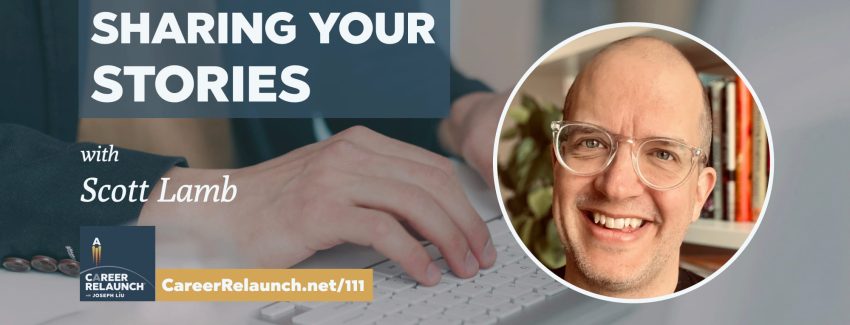
On episode 111 of the Career Relaunch® podcast, Scott Lamb, VP of Content at Medium why writing is more than a communication tool. It’s a powerful way to clarify your thinking, build your voice, and open up opportunities for yourself by sharing your ideas. We discuss how to manage the common barriers people face when writing and how writing is a skill anyone can develop along with the current dynamics, opportunities and challenges AI has introduced into the world of written content.
💡 Key Career Insights
- Writing isn’t just about sharing your work with others. Writing clarifies your own thoughts and helps you process your own experiences. You don’t even have to publish your work to reap the benefits from the act of writing.
- Adaptabilty is critical, especially during this age of AI. Change can be scary, but resisting the change isn’t always the best course of action.
- Sharing your ideas can open up opportunities over time beyond your immediate network by demonstrating your expertise, building your credibility, and signaling your involvement and interest in a specific domain.
📚 Resources
- Medium
- Writing Hour: Every Thursday, 10am and 12pm ET. Cameras off, relaxing music, just write.
- Medium 101 webinars: Wednesdays and Fridays. Send your newer writers! We cover formatting, tags, images, and all the basics.
- Check out host Joseph Liu’s Medium profile.
- Read Why Writing Still Wins in the AI Era– by Scott Lamb
💪🏼Listener Challenge
 During this episode’s Mental Fuel® segment, I challenged you is to start writing. Don’t worry about if, when, or where you’ll publish this. Just think of it like a quick snapshot of what’s on your mind. It could be something interesting that happened today. Or something you noticed. Something that bothered you. Something you’re struggling with. Something you’re working on. Or worried about. Or excited about. Or just something you learned about yourself. Even one paragraph can suffice for now. If helpful, read Scott Lamb’s suggestion on how to get started with writing.
📖 Episode Chapters
00:00:00 Episode preview
00:01:07 Introduction
00:03:58 Chat with Scott Lamb
00:08:59 Scott’s early years
00:14:12 From philosophy to journalism
00:17:29 BuzzFeed & the rise of online media
00:23:39 Life at Medium
00:28:52 Writing tips & common mistakes
00:33:33 Writing for your personal brand
00:39:30 AI & the future of writing
00:44:17 Career lessons & adaptability
00:51:31 Mental Fuel®: the power of writing
01:00:47 Listener Challenge
01:02:37 Wrap-up
👤 About Scott Lamb, VP of Content at Medium
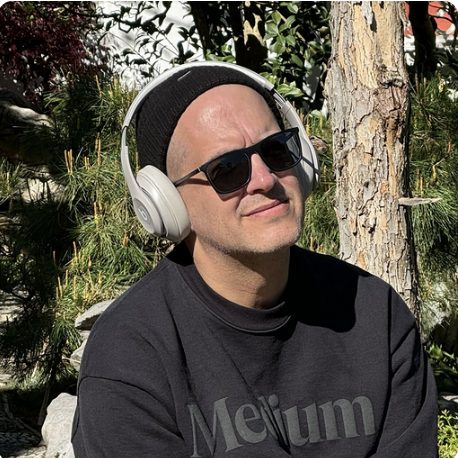 Scott Lamb didn’t set out to work in media. In college, he took a lot of German classes and studied philosophy, falling in love with the ideas people held in their minds. He was originally planning to do a Ph.D. in Philosophy before journalism pulled him off course. What followed was a journalistic and media career that took him from Salon to BuzzFeed, where he led their international expansion and eventually to Medium, where he served as the VP of Publisher Growth & Strategy and now as the VP of Content, navigating the advent of the AI era and its impact on the craft of writing right now, for better and for worse. Along the way, he’s spent a lot of time still exploring ideas, but now in the context of writing, like why some writing seems to appeal to an audience while some just doesn’t. You can find more of his thinking at scottlamb.blog and follow him on LinkedIn.
👍🏻 Did You Enjoy This Episode? Please Let Us Know!
- Review: I’d also love for you to leave a positive review and rating for the podcast on Apple Podcasts, which helps my show reach more people who want to relaunch their careers.
- Follow: Be sure to follow the Career Relaunch® podcast on Apple Podcasts, Spotify, Amazon Music, or Android so you can automatically get each new episode on your device. Full instructions.
- Stay in touch: Follow the Career Relaunch® podcast on Facebook and LinkedIn. You can also follow host Joseph on LinkedIn, Instagram, Medium, YouTube, Facebook, Threads, and Bluesky.
💬 Comments, Suggestions, or Questions?
If you have any lingering thoughts, questions, or topics you would like covered on future episodes, record a voicemail for me right here. I LOVE hearing from listeners!
Leave Joseph a Voicemail
You can also leave a comment below. Thanks!
🙏🏻 Thanks to Wispr Flow for Supporting the Career Relaunch® podcast
 If you’re looking for a quick and accurate way to capture your thoughts, Wispr Flow is an effective voice-to-text tool that turns your spoken words into written text. Speaking is so much faster than typing and often feels more natural without having to deal with typos. Wispr Flow makes writing so much faster with seamless voice dictation, it edits while you speak, and turns your thoughts into clear, polished text. Learn more at CareerRelaunch.net/wispr.
📄 Episode Transcript
[00:03:58] Joseph: Alright Scott. Well, welcome to career relaunch, and thank you so much for taking time out of your busy day to come onto the show.
[00:04:05] Scott: My pleasure. Really excited to talk.
[00:04:08] Joseph: Well, I would love to start by just hearing from you about what has been occupying your time in both your personal and also your professional life recently.
[00:04:19] Scott: It’s funny because it’s the same thing. It’s AI. I feel like every single conversation I have somehow at some point comes around to talking about AI. We were on vacation recently with the family, and at some point my older daughter was like, please, dad, can we stop talking about AI?
[00:04:36] Joseph: How old is your daughter? How old is your older daughter?
[00:04:38] Scott: She’s ten. She’s ten. So like we’re getting together as a group, it just kind of inevitably we were starting to talk about AI again. And she was just like, I just don’t want to hear about it anymore. It’s so boring to me.
[00:04:48] Joseph: So it does seem to be.
[00:04:50] Scott: The.
[00:04:51] Joseph: Topic. Yeah. Everywhere in everything, and it must be touching a lot of your work also. I would love to hear a little bit, just very briefly, because I want to get into more detail on this later, but could you give me just a snapshot of what you do professionally?
[00:05:05] Scott: I mean, I work with words on the internet. That’s kind of the core piece of what I do working at a platform like Medium. We’re really about trying to unlock people writing and sharing their writing. And AI tools are obviously like changing the landscape around that kind of work really quickly and dramatically, like both for good and bad. There’s like a lot of possibility and excitement. There’s also a lot of slop. So we’re dealing with both at Medium.
[00:05:30] Joseph: Now, for those who are listening to this and maybe they’re not familiar with the platform. So Medium is one of the world’s most highly visited sites in the world. I just looked it up this morning on SimilarWeb, and it’s within the top 600 most visited sites globally, the top 500 in the US. It’s been higher in the past also. Could you just share a quick overview of the platform and maybe how it compares to other publishing platforms that exist out there like LinkedIn publishing, Substack, maybe even somebody’s own blog Medium.
[00:06:02] Scott: We think of ourselves as a reading and writing company, so as a platform, we’re a place where readers and writers come together. We really want to connect people who are curious about the world and have questions, want to learn something, deepen their understanding with writing that will help them do that, and to enable people who have expertise or experience that’s valuable for other people to learn about, to be able to write about it and share. I think the thing that sets Medium apart from most of those other places is really, ideally, we’re for people who have things to say. They’re not trying to launch a small business around their media empire. They’re maybe not even really think of themselves primarily as writers, but write alongside other things they do. They’re experts in their field, and they want to share their knowledge They are building a professional profile in some way, and I think the real advantage Medium has. You know, it’s a clean, well-lit space to write on the internet, so there are no ads interfering with the user experience. We’re very focused on the user experience for both readers and writers, but I think the thing that we provide for writers that’s unique is an audience. You don’t have to have a mailing list or a social media presence to come onto Medium and to write something that people are going to see. We have a big website in terms of visitor traffic, so we have a large and really curious community of readers, and our job is to connect them with things that they’re interested in. In reading about the opportunity for writers is to come on and get distribution, get an audience, which from my many years over the over the decades in the media industry, you know, distribution is the hardest challenge. And that’s the thing that we try and solve for people.
[00:07:43] Joseph: I’ve actually been a very loyal follower of Medium since 2014, during the very earliest days of Medium and thinking, wow, this is a really unique, promising platform. And I remember seeing Lori Siegel, a reporter on CNN, doing a feature on Medium in 2016, interviewing one of the founders of Williams. And he was talking about Medium. And I just thought at the time, this is such an interesting place for people to spend their time. And as you mentioned, it’s like a really clean, really pleasurable place to write. And you don’t have to think about like font or formatting or how to create a WordPress blog. It’s just ready to go out of the box. So I do want to get into the ins and outs of Medium and get your thoughts on the current state of self published articles and blog posts. In a world of increasingly driven, AI generated or assisted content. But before we do that, this is a career show. So I’d love to hear a little bit more about you because this show is about career change. Now, you haven’t always been the VP of content for Medium. Your initial plan wasn’t to actually go into journalism or online content when we last spoke. So I’d love to go back in time here and just go back to the beginning and thinking back to your childhood. First of all, where did you grow up and what do you remember being some of your favorite things to do growing up as a kid?
[00:08:59] Scott: I had a lucky sort of combination of things in my childhood. I was born and lived most of my time as a kid in Boulder, Colorado, which is an amazing place to grow up. We lived kind of on the edge of the city, so the mountains and there’s an extensive trail system that sort of rings boulder. So I’d spent a lot of time in the woods exploring, walking, you know, playing games with my friends there. When I was eight years old, my dad, who worked for IBM, got a job that took us as a family to Tokyo. And it’s kind of hard to draw two places that are more distinctly different than Boulder and Tokyo. Like, you know, very outdoorsy, not urban at all to one of the biggest metropolises in the world. But a thing that they did have in common is this like ability to go and explore? When we moved, I remember my parents for some reason were very like direct with us about this, that the crime rate in Tokyo was lower than the crime rate in Boulder, Colorado. And like Boulder, Colorado did not have a high crime rate.
[00:09:59] Joseph: It’s a pretty I don’t think of it as a dangerous place.
[00:10:01] Scott: College town? No, no. But somehow Tokyo was still even safer and has an amazing public transportation network. So I had the ability as like a ten year old to, you know, get on the train and go and explore on my own in Tokyo. And that, I think cemented a lifelong love. I think hiking, walking and exploring cities is one of my favorite things to do. Also, living in Japan at that age obviously got very into Transformers, which I think had not yet come to the United States like they were, you know, as a Japanese show to begin with. And kind of all of the anime and manga like that, cartoons, Japanese cartoons and anime were like a real fascination for me growing up. It was an amazing experience to have as a kid.
[00:10:49] Joseph: How did you then go from that life of. I guess it’s kind of a lot of contrast here between Boulder, Colorado, Tokyo to eventually deciding what you want to study in college. You mentioned last time you were originally planning to do a PhD in philosophy. So I guess I’m curious, why did you want to do that? And then why did you not ultimately end up doing that?
[00:11:11] Scott: I took a year off between high school and college and lived abroad in Austria, and that came together in kind of an odd way. I had applied to do an exchange program with the Rotary Club, and they have this like very big global international exchange program. And I’d been hoping to go to Italy, and that fell through at the last minute. And they gave me a list of countries that I could choose to go to. I really wanted to go to India. My parents were pretty set against that as a 17 year old. So I chose Austria thinking I would be able to do a lot of snowboarding, and I ended up in the 10% of Austria. That’s totally flat wine country on the eastern side of the country. It turned out to be lovely. But you know, my expectations met a very different reality. Anyway, I learned German while I was there, and when I got to college, I took a lot of German courses and started studying philosophy, kind of through my German ability, and just really fell in love with it. It’s, I think philosophy had been on my mind for a while, as I remember as a kid seeing a cartoon where, you know, there’s sort of three people sitting, I think they’re in the countryside somewhere, and there are some sheep there. And you see the thought bubbles of all three of them. And two of the guys are thinking about the sheep. And the third guy is wondering what the other two are thinking. And it was like, this is what a philosopher does. And I just found that idea of like, oh, you can be the person who’s wondering about what thoughts are going on inside of other people’s heads.
[00:12:36] Scott: So I’d have this love of the idea of philosophy and then getting into college and actually understanding it was I just really loved wrestling with those ideas. I was a big fan of the Austrian German philosopher Ludwig Wittgenstein, and got to read a lot of his work in the original, which was like probably the most difficult intellectual task I’ve ever done. But I was really, you know, at that point, somewhat plugged into what was happening in contemporary philosophy and looking at a couple of programs in the United States. So I had a little bit of time off between graduating from college and deciding what the next thing was, and had really been deep in looking at a couple of different philosophy programs. And then a friend of mine mentioned this program that she thought I might find interesting at NYU. That was a cultural reporting and criticism program, and I’d been doing in the interim some freelancing for local alt weekly newspapers. So I’ve been doing a little bit of writing, a little bit of journalism. And I thought, oh, this sounds like a very intellectually rigorous journalism program. Maybe this is kind of a nice mix of the things that seem to be interesting to me right now. So I applied there and got in, and it seemed like a better, much cheaper graduate program than going and shorter than going and doing a doctorate in philosophy. And I think at the time, I thought, maybe I’ll come back to the philosophy thing a little bit. Let me try my hand at this, move out to New York City and kind of see how this goes. But very quickly, I was pretty sold on the idea of then getting into media.
[00:14:12] Joseph: You graduate in 2003. If I got my timeline correct here from NYU’s Cultural Reporting and Criticism program, and then you pretty quickly got involved in writing professionally, and you wrote for salon for LA weekly and others. Can you just share with me this chapter of your career? And then I’d be especially interested to hear how you found it working in the industry at the time. And when I say at the time, we’re talking about the early to mid 2000. And just imagining the content landscape was just so different at the time. This was pre iPhone when you started.
[00:14:47] Scott: So my sort of road into writing at salon was a professor of mine at NYU. So I mostly tell people who are thinking about journalism school not to do it. I think the vast majority of people who I graduated with in that class have gone on to the legal profession they’re doing. They’re now therapists, like they’ve done very, very different things. But I feel like I got pretty lucky. And I had a professor that I really had a connection with, and he helped me get a job at salon. But even at that stage. So 2003, the internet was like this new, slightly scary thing. One of my professors really was like against me going and working at salon. She’s like, you know, that thing’s going to fall apart immediately. You need to try and find a job at a magazine. But the irony was this was also the last gasp of the magazine industry in New York City. So I did an internship at details magazine. You know, that magazine then was like constantly going through a state of change and downsizing a bunch of the big titles that were places that I think a lot of us hoped to work at just don’t exist anymore. And it was like within five years after we graduated, a lot of them had shuttered. So, you know, I think I was looked at a little bit, not as a black sheep, but I think from my graduating class, I was probably the only one who went and worked for an online outlet. And it felt like, you know, I was happy to have a job, but it sort of felt like maybe this is a slightly speculative move.
[00:16:11] Joseph: We’re all so used to online content now, but if I remember correctly. So I went to northwestern and they’ve got a big school of journalism. So some of my friends went into journalism. And I remember in the 2004 U.S. elections, that was actually one of the first times when the term blogger existed and people were blogging actual news content. This was a very, very unknown concept at the time.
[00:16:34] Scott: That was the year. So I think at the Huffington Post had just recently launched Huffington Post. Huffington post played this huge role, and I remember I was living in Berlin at the time. I did a fellowship after graduating, and that took me to Germany for a year. And I remember writing about the election a little bit for a German outlet there, but I remember the Huffington Post launching and everyone being like this blogging thing is now like becoming media. What is that going to look like? It was very you know, I think there was a lot of disdain from more established journalism circles about, you know, what Huffington Post was trying to do. But it was clear that things were changing pretty quickly at that point.
[00:17:11] Joseph: Now, you would eventually go to work at BuzzFeed, which has gone through its own evolution over the years. Can you just tell me a little bit about your time there? I think you started as a senior editor there and then went all the way to becoming an editorial director, and then after that, I’d love to spend a little bit of time talking about Medium.
[00:17:29] Scott: I came back from Germany. Was working at salon. Really enjoying it, doing sort of arts and music coverage from them. And then I saw a little bit of news about Jonah Peretti, sort of follow up to the Huffington Post, and he’d been on my radar. I knew him a little socially, like I think we had maybe met at some point at a party or something like that in New York. We had a friend in common, but I was like, oh, this is really cool. And I saw a lot of overlap with the stuff that I was very interested in at that point, which was trying to understand what was taking off online. So, you know, this was now 2006, 2007. The internet had evolved quite a lot in those four years since I graduated from NYU. And it was really clear that if you knew where to look, you could get an early indication of kind of what was about to take off. You could kind of get a sense for the momentum of things in culture, if that makes sense. And I thought that was a really cool, interesting idea. You know, Google search, I think had just recently released some of their trends information. And you could kind of be like, oh, this particular story is taking off in a way that you could then write about it and sort of encapsulate it. And that’s really what early BuzzFeed was. So I like reached out to Jonah. I was like, this seems like really cool. And he, in a very startup way, just immediately offered me a job and was like, you should come work here, leave salon and come do this. And so it felt a little bit like another leap of faith, very similar to when I had first joined salon, because I was really leaving journalism behind. I don’t think there was a good word for what it was that BuzzFeed was doing at that point. The company was five people pre, I think all angel funding at this point, like very speculative, but very, very cool.
[00:19:12] Joseph: I know you just kind of mentioned just kind of left journalism behind, but at this point, you spent years in that industry. Like, did you find it difficult to leave behind a career you’d invested into, or was it did you see it as kind of a natural evolution? And the reason why I ask is I often talk to people who are on a reasonably good career path, and then something a little more sparkly shows up and like, how do you know whether that sparkly thing is the thing you should go after? Or if it’s just a blip? Like, how did you think through that?
[00:19:40] Scott: Definitely part of that. I mean, I was relatively I was still early ish in my career, but I’d put in time for sure. And there was a path, I think if I had stayed at salon, I could have, you know, I saw where I could have gone there and then to other places that were more similar to it. But I think also at that stage, it was very clear that the media industry as a whole was going to continue to change. And mostly by change, I mean contract. So I saw in BuzzFeed not only an opportunity to do like a new and interesting sort of sparkly thing. There was something shiny about it. I like talking to Joan. I liked meeting the people there. I thought they were doing this just interesting new thing. But it also felt in some ways like the safer bet than staying where I was, because it seemed to be going in the direction that the world was moving. That was a gut sense, you know, I think it turned out to be right or it was right for a very long time at BuzzFeed. But I think I had to sort of go with my gut that in the long term, the thing that I’d been doing at salon would probably, you know, the opportunities there would only be shrinking over time and BuzzFeed would probably provide new ones. And it was a lot of fun. There was like a big part of it that I was like, this job seems like it’s going to be really, really good time and I’m going to learn a lot doing a new thing.
[00:20:51] Joseph: Now, just to switch gears here a little bit, you’re having a good time at BuzzFeed. And then at some point, you decide that you’re going to move over to Medium. And I would be curious how you thought through that. And again, just kind of doing a bit of a timeline check here. I think this transition happens between like 2019 and 2020 ish. Is that right?
[00:21:11] Scott: Yeah, that’s exactly right. So at that point, I had been at BuzzFeed for 13 years. Oh, wow. So okay, you know, I’d gone from being at a tiny little startup. I was a little older at that point. I had gone through grad school, but like youngish in my career, figuring things out. And now BuzzFeed was this pretty established behemoth. I sort of got to rise with the company as it expanded. So it went from my initial role to overseeing really the team that did lists and quizzes at BuzzFeed.
[00:21:41] Joseph: Oh yeah. Listen, quizzes I. Yeah, that was I was like.
[00:21:45] Scott: That was our thing.
[00:21:46] Joseph: Right?
[00:21:46] Scott: That was that was the thing for a while. It was again, that was like very fun to be like working on those formats and kind of seeing them take off in that particular cultural moment. Sort of my next move there was to take BuzzFeed international. So I got to see oversee the international expansion of BuzzFeed and launch in almost a half dozen countries around the world. That was also just incredibly interesting to get to sort of take BuzzFeed’s model and see if it could work in Japan or Germany or Brazil. But the company also then entered what was, I think, the beginning of a pretty protracted period of of consolidation and decline as well. And the international businesses were like new. They hadn’t fully established themselves. They were cost centers for the company. And so I had spent the early part of 2019 doing layoffs. You know, I flew around the globe. You know, it was it was like I was in up in the air, that George Clooney movie that I was just on a plane flying around the world and delivering really bad news to people that I had hired and brought in. That was a huge bummer. And I was also like, man, it’s been 13 years. I’ve seen a lot of the challenges in this part of the industry. I feel like I want something new. That was a moment that I started looking around and thinking about what could be next. And I did look outside of journalism. I talked to some nonprofit institutions. I thought, where are places that my skill set could be applicable that aren’t just pure media and that are maybe mission driven in some way? None of those conversations landed. Obviously, I ended up going to is Medium a media company? I guess that’s like a little bit of a question, but something more familiar for sure. I think I just wanted to change, I wanted a new set of challenges at that point, and I didn’t want to be, I think, working in particular at an advertising driven media corporation. I think I just had seen seen enough of that for a little while and wanted something new.
[00:23:39] Joseph: Speaking of Medium, I would really love to spend a little bit of time here just hearing your perspectives on Medium. I know you’ve spent time there as VP of publisher, Growth and Strategy. Now you’re the VP of content, and I have always been impressed with Medium as a platform ever since I first discovered it in 2014. And I remember I first wrote my first article, I guess not article, but story piece or something. Story piece or story, whatever you want to call it on Medium. In August of 2014, I was actually just looking back at this and yeah, it was on how I prepared for my first Ted talk, because I had given a Ted talk earlier that year. And then since then I’ve written over 150 articles on the platform, and I’m just. I’m actually not somebody who loves writing, particularly. And I crossed paths with a lot of people out there who maybe think about doing writing. They know it’s a great way to drive up their visibility, but they kind of struggle with the idea of putting their writing out there. I think we’re all a bit self conscious of our writing. And so for people out there who who either do or don’t like writing, why even consider writing these days as a way of sharing your voice versus, let’s say, video content on YouTube or even podcasting? What we’re doing here.
[00:24:58] Scott: I think there’s something really inherent about the act of writing that serves two good purposes for people. One, it does sharpen your thinking. You know, writing, from my perspective at least, is not just an output, it’s a process. So if you want to write something, you want to share something. I mean, the story example you gave of how you prepared for your first TEDx like that is a perfect Medium story, right? It’s you sharing your personal experience. You tested this out. You obviously went on and spoke at TEDx, right? And this was about your experience of prepping for it. And that’s like, I think ideally the kind of thing that we want to see happening on Medium. I think to do that, then you had to sort of organize your thoughts into like, well, what was it that I did in a way that’s presentable? I feel like probably made you understand that process a lot better for yourself. So even if you at that point hadn’t published anything, you know, you’re already a little bit further ahead than you were before you wrote anything.
[00:25:53] Joseph: That’s true. Yeah.
[00:25:54] Scott: That’s sort of value number one. And then value number two, I think the act of sharing that with the world brings so many benefits. We hear stories of people getting book deals on Medium. We hear stories of people making connections that benefit them professionally or personally on, on Medium. And I think it’s people need something they want and are looking for something to respond to like that. And you have this ability to make a real impact in people’s lives when you share your words. And I think video is great. Podcasts are wonderful. I’m very honored to be on here and talking with you. I love listening to people in conversation and podcasts. Writing is so portable. It is so cheap to produce, right? It’s not. That’s true. Time consuming. You know, you can share a lot of your ideas at a pretty high volume if you’re that type of writer and thinker and sort of test out your ideas. I think there’s also something beautifully incremental about it that you can share something and then get a little bit of feedback on it. You could share it with a friend or a small group of people. It could get better. You could share it with a larger group and see how it’s landing with people. And that feedback loop. I think that’s something that I’m very sensitive to from my time at BuzzFeed. That feedback loop is so powerful and also such a gift. And sure, you can definitely get feedback on podcasts. You can definitely get feedback on videos, but I think the sort of feedback loop on writing feels very tight to me, especially, you know, on Medium, people can highlight the sentences that are landing for them.
[00:27:26] Joseph: Oh yeah.
[00:27:26] Scott: I love that. You can really get a sense of like, oh, this is what is really landing for the people who are reading my work. And that I think is incredibly valuable. So I hear and feel that too. The difficulty of writing is high. There’s a high bar there, and the public piece of it in particular is very, very scary. So a lot of our work is us trying to figure out how do we support writers, make the act of writing and sharing feel more safe for people. Got some new products in the works that I think will kind of help with some of that. For me, as a really satisfying and sort of mission driven place to be to, you know, I believe in the power of writing, and I feel like my job is to try and help tease it out of more people.
[00:28:07] Joseph: What you mentioned about just the act of writing, even if you don’t publish it anywhere, it helps you synthesize and process your own experiences and your own thoughts when you get it down on paper. I’ve kept a journal. Well, it started off as a written journal, and then I kind of shifted over to a typed journal on my computer. But I’ve been doing that for decades, and I just find that it is just a really. It’s not only grounding, but it’s something that you can kind of look back on and kind of connect with your former self. And so it’s nice. I still do like reading people’s work and I still do enjoy writing. I wish I was better at writing, but I do enjoy it. I find it to be an enjoyable process. What are some of the common mistakes that people make when they begin to write, or when they’re starting to write for the first time?
[00:28:52] Scott: It’s really funny because I’m volunteering right now for my daughter’s school. They have a newspaper, she’s an elementary school, and they have a newspaper club. Oh, nice. I’m getting to work with a bunch of, you know, like ten, 11 year olds writing their first newspaper stories. And I think they make the same mistake that I see most writers, right, make when they begin writing. So this is going to sound a little contradictory to what I said about the value of writing, just purely for yourself. I think that is true. But when you’re writing for an audience, the most important thing is to start with, what do I want the audience to get out of this? Is there a story that I’m sharing here? What is the value of that story? What do I want people’s takeaways to be? I think because writing feels so vulnerable and you’re putting your mind kind of out on the page, so to speak, for people to read. When people start writing, I think they’re very focused on that experience and being like, well, I want what’s on the page to match up with what’s in my head. And they forget about the person on the other side of the page, or in most cases, the other side of the screen, sort of beginning writers that we see on Medium, it’s a similar thing. It’s essentially, you know, there’s a lot of journaling that’s just like very much for the writer themselves to get out in the world. And I think getting through that process and starting to see through to the other side of what is it that I’m trying to share? What is the story that I’m trying to tell, and what do I want people to take away to be kind of the first hurdle, I think, for a lot of writers to get over.
[00:30:13] Joseph: Do you have any best practices or writing tips for people who are getting started, and maybe they just don’t even know what to like? They know they want to write, but they don’t know what they want to write about. Any thoughts on how to just narrow the field a little bit in the sea of things you could write about as a writer?
[00:30:36] Scott: This advice is so pedestrian. I’m almost sad to share it, but I also believe very deeply in it. You just have to write a lot. You don’t have to publish a lot, but you do have to write a lot, because I think I have found that people aren’t able to sort of get to that thing, like, what is it that I really want to write without doing the activity of writing? One of my favorite books ever is a very short book called Art and fear, and it’s sort of about the artistic creative process, really, really easy read. And there’s a central parable in there about an art professor at the beginning of the semester. Offers people in the class kind of two choices of how they are going to get graded. One, they can turn in just a single piece at the end of the semester, and he’s going to grade them on that, or they can make a bunch of pieces over the course of the time, and he’s going to weigh the total number of pieces, and they’re going to be judged on the weight of what they’ve made. Sorry, this is a ceramics class. He has done this over years, and he consistently found that the students who chose sort of the volume direction, the weight direction, their pieces were always better than the folks who just chose to turn in one at the end of the semester, and that it was really you only get better by doing.
[00:31:45] Scott: And I think that’s so, so true for writing. You know, I’ve been really interested. I’m like, I’m jealous to hear about your journaling practice because I think that’s extremely valuable. And I’ve never had that for myself personally, but lately have been doing morning pages, which are very, you know, I think a lot of writers talk about doing morning pages. You kind of get up and try and get roughly 750 words onto the page right at the beginning of the day that you then never look back at, like you’re not doing anything with this, where it’s just getting the words out. And I have found I’m developing a slightly different voice through doing that. I’m like noticing some patterns in what I’m writing about. And I’m like, oh, there’s something here that obviously interested that I might want to take and kind of pull out and put into a piece somewhere. So unfortunately, the only way out is through. I think with writing.
[00:32:33] Joseph: I do find that the act of writing and just doing it is helpful, like doing it without judgment, which I think is why I like the journaling thing, because there’s no audience. It’s just me sharing my honest thoughts with myself and either this piece of paper or this screen, and that’s it. And so I find that that’s useful. I started doing that when I was in junior high, just like in a, I was like, in a word, perfect document at the time when WordPerfect was around. And then, yeah, I still do it. I just don’t do it as often because I always find excuses is what I hear from a lot of people. There’s always a reason to not write, and it feels like a lot of friction there.
[00:33:11] Scott: And it’s tough because it’s very rare that there is a reason to write. I mean, no one is knocking down your door to get your thoughts right. Like, I think that’s true even for professional writers. Like that’s just not how the world operates. So you’ve got to have some grace with yourself.
[00:33:33] Joseph: I’ve got a couple other topics here that I’m hoping to cover with you about kind of getting into more of the technicalities of it. And also just, I want to touch on AI, but also just the impact on your career. So I know you mentioned just now, like people don’t always have really clear, obvious reasons to write. So therefore the motivation may not be there to do it. What role do you think Medium or even just writing in general publicly, can play in the development of one’s personal brand and also professional reputation?
[00:34:02] Scott: I really think it’s probably the most powerful lever that people have outside of their actual work. So, you know, your performance at work, the amount of impact that you’re able to have and the job that you do is obviously, if you’re switching jobs, the thing that a lot of employers are going to look at, having a surface area of your thoughts that are out there in the world, to me, feels like such a way to accelerate that. I don’t know, I’m just imagining, even for myself in the hiring process, if I have a candidate who has a great resume and interviews well, but no written work and someone who does also have written work, I have immediate access into so much more of their perspective on the world, their understanding, their approach, where they’re coming from. It makes them just so much more legible to me as an employer. And I think having that legibility opens up all sorts of opportunities. You know, when I a couple of years ago started writing about AI policy at Medium, and I was doing it in my professional capacity. It wasn’t sort of a side project blog that I was writing about, but I was trying to be reflective and talk a little bit about the experience that Medium was going through as we were starting to grapple with AI. And it just opened up a whole bunch of conversations of people that I might want to work with in the future, or panels that I could join.
[00:35:18] Scott: So I think for people, it feels like the simplest. Again, it’s very cost effective. No special equipment that you need. You know, you don’t really even need to again, spin up a website. And I’m not just plugging that. People come and use Medium. There are a lot of tools that will host your words for free. It’s also very easy for other people to connect with and to understand. It has, I think, a really healthy effect on just increasing your value as a potential employee, as a person in the world, and opens up a lot of doors. So I really feel like everyone is a writer. The identity of a writer really cuts both ways because there’s the sort of capital W, you you know, version of a serious literary writer. But we’re all writers. We write texts every day like you’re in written communication pretty much constantly, I think, in our lives. And we don’t then translate that into, oh, I can write about my life. I can write about my work in a way that would be interesting to people. I think that’s really at the core of the mission for Medium, which I’m really personally very aligned with, is trying to get people to make that connection and share more of their writing with the world.
[00:36:30] Joseph: I do cross paths with people who attend my personal branding workshops. I do mention Medium in those workshops as a platform people should consider. Sometimes I’ll get asked by people. I also do some writing for Forbes. They’ll ask me like, do you get paid for this? Because you mentioned cost effective? And I was looking at your LinkedIn background image, Scott. And it says on there that you love paywalls. And I know this is getting into the weeds a little bit, but like to paywall or not to paywall your articles, like how much should people be thinking about that when they’re writing? And I know this must depend on the individual, but I’d just love to hear your thoughts on paywalled articles versus free articles.
[00:37:08] Scott: It does obviously depend a lot on your profile, kind of what it is that you’re trying to do in the world. You know, a lot of the best writing on Medium is not behind a paywall. We have a lot of people who are there, you know, they want to make money with their writing, but they’re making money by landing clients, opening up opportunities like they see it as a way to develop a client base or pitch for business through their ideas. And that’s hugely valuable. But you’re not getting paid directly for the words. Earning a living as a person who only writes words is tough. I came from journalism that was not a lucrative career. In a lot of ways, there are fewer and fewer places who are paying directly for writing, so there’s a path there, I think, for folks to think about. What is the driving force behind pay walling your your stories is, I think, really important. I believe in that image on my LinkedIn is a little bit tongue in cheek, but also, you know, that’s how I get paid is a paywall. And I’ve seen the other side, advertising based media has a lot of its own problems. I feel like subscription based media and something based on a paywall, it’s like democracy. What’s the quote? It’s the least bad form of government or it’s, you know.
[00:38:19] Joseph: Right. So it’s exactly yes.
[00:38:23] Scott: Paywalls are by no means perfect, but I feel like there are a much better alternative to advertising based media. But it’s a really tricky and I think very personal decision for folks about when it is that they want to pay all their stuff versus having it be out there and be free.
[00:38:38] Joseph: I don’t think I pay well any of my articles. It’s for the reasons you mentioned, Scott. I kind of see it as both a way for me to share my thoughts with the world and kind of give to people, and also just to be kind of ruthlessly practical about it. I would like people to see my writing. And so I see it as like content and kind of a marketing channel and, but mostly just to kind of just share with people and just to give. So I got one more question for you here about Medium specifically. Scott. And I would love to also talk about some of the lessons you’ve learned along the way of your career change journey. But we got to talk about AI, and I would be very curious to hear your thoughts. I mean, you are at the bleeding edge of this. Like, what impact do you think AI has had on writing quality? I’ll say the follow up question, which relates to how you’re dealing with AI assisted engineering. But I’m just curious, what impact do you think AI has been having on the writing quality that you’ve seen out there?
[00:39:30] Scott: It’s not great for Medium in particular, but I feel like I’m seeing this elsewhere as well. There’s kind of like a double whammy of impact one, because it is now so simple to generate really any amount of text that you want, put it into article form. There’s been a deluge, there’s been a wave of AI slop. And it’s not like there was bad wasn’t bad writing prior to this. You know, it used to be that our trust and safety and moderation teams at Medium would spend time checking for plagiarism. So we had tools that would help us do this. And, you know, there were sort of hallmarks of certain types of stories that you’re like, that’s really interesting that this writer is writing about, you know, both 18th century French literature and, you know, JavaScript programing. Like that’s weird. Where are they getting these ideas? And like, you would check and be like, oh, they’re just cutting and pasting from other websites. That has declined dramatically because there’s kind of no reason to go like it’s too much work to go cut and paste when you can just put a prompt into AI. So for a long time, I, you know, I think there were so many hallmarks of AI writing. It was like relatively easy even for a human to spot. We have not found a programmatic way to spot this. So I think it has created a situation where there’s now an environment that is filled with a lot of low quality, slop driven writing that’s bad in and of itself. But I think the second order effect is that it’s having, at least for me. And I think this is going to be true for a lot of people in the future. I now question almost everything I read.
[00:41:01] Joseph: Me too. Yeah. Me too.
[00:41:03] Scott: And it’s very taxing. Yeah. It’s like an extra step. Oh, God. Now I have to, like, do some vetting or sort of think through if I think that this is AI or not. This is a big question for Medium. At a platform level. We’re wondering what do we need to put in place to make that question go away for you as a reader on Medium or we’re not there yet, but like, ideally, you’re not going to have that question, I hope going to the New York Times, part of the value of institutional media like that is that you kind of need to have some trust in the people who are producing it. But for user generated platforms like Medium, I think the future is going to have to be something like there’s some level of verification and trust that we’re doing at a platform level so that people don’t have this question. I think the other thing is, though, like I will say in the positive side, the idea of writing things that are both human and AI legible, I think is really interesting and really, really valuable. I’ve been doing some work with AI tools, just looking back at my own writing and pulling out themes, or I’m writing about a particular topic and I’m like, I’m curious what I’ve written about this before, and being able to pull from my own archive into something that I’m writing now is really valuable.
[00:42:15] Scott: Like there’s something I now have a mechanical assistant who can do a thing that would be really time consuming and labor intensive for me, for my just my own work. And that feels like the beginning of a lot of possibility of what that relationship is going to look like. So I think I’m really interested in like skating along that line, like, what are the things that this will unlock for us at the same time? Right now, the overwhelming impact I think of AI on writing has been to really to cheapen it both for consumers and for writers. I think also, you know, we’ve been talking a little bit today about how difficult writing is. Now we have a shortcut for it, for people. And I think the thing that gets lost there is the thing that I talked about first of like, it helps you sharpen your thinking. And if you’re not doing the writing, that step is being skipped entirely.
[00:43:03] Joseph: That’s so interesting, Scott. I definitely have noticed an increase in AI generated content submitted to a couple of the Medium publications that I host. Like it’s been a pretty high percentage just recently. I just like in the last few months, it’s like 100%. I’ll run it through something like Pangram or something to detect whether I’ve seen like an influx of AI pitches for Forbes articles and requesting source input, which is, as you mentioned, kind of makes my life as a writer way more difficult because I got to then take this extra step to first check to make sure the expert input is genuine. But at the same time, I think what you’re saying is really interesting too, because you can use it as a tool to comb through your writing. I recently had to go through my historical writing on Medium and kind of share with me what trend it’s noticed in my writing style. And it was interesting to read through it said, yeah, you started off being very prescriptive. Now you’re being a little bit more personal, a little bit more vulnerable. I thought, okay, that’s, that’s interesting to see. So I think it can be an interesting, right? Yeah, it can be an interesting tool to vet your writing.
[00:44:03] Scott: I would like to be able to have that conversation about my own writing. I’m not going to have that with another person. And these tools, I think are pretty fantastic for that. And we’re, you know, it’s early, early, early, early stage, but very mindful of both the pluses and minuses.
[00:44:17] Joseph: The last thing I was hoping to talk with you about before we wrap up is just some of the lessons you’ve learned in your own career journey, because it’s gone through these different chapters, and I would be curious to hear about how you now think about your career looking back on it. So like, if you could go back and redo how you approached something during your career evolution, does anything come to mind?
[00:44:43] Scott: I think the thing that for me has been the most valuable. I don’t know. Skill is the right word, but maybe a mindset that I’ve cultivated over time has been adaptability that’s been forced on me a little bit. You know, I went into the media industry at the dawn of the internet age, taking over and then mobile, and it has just been a constant period of change through the entire course of my career. And I think the moments that have felt the most challenging have been the ones with the most change. And the challenge has mostly been my resistance to change. And I feel like when I’ve made missteps, it’s been moments where I wasn’t like, all right, I’m gonna let it go and I’m going to go with this new thing because that’s the direction that the world is heading in. And that can be really scary because again, you’re operating then on faith or intuition. It’s not, you’re taking a bet. But I have found every time that I didn’t take the bet, I’ve regretted it. And every time I did take the bet, you know, I’m on salon and then on BuzzFeed. And to a certain extent on Medium, you know, Mediums changed a lot in the time that I’ve been there and I’ve had to re-up with a number of those changes. That’s turned out to be the right way to go.
[00:45:51] Joseph: When you look back on your career change journey and your career evolution, what’s something that you wished that you had known, that you now know it might relate to what you just mentioned?
[00:46:05] Scott: I mean, I think if I knew what was coming with the internet, I would have gotten in there a lot. Even even earlier in, in that direction. I think thinking about the moments of career change, I wish I’d gotten more clear advice early on about the importance of having a network of people that you trust in the industry. I think all of those sort of inflection moments. What’s been most helpful, and that I wish that I always had more of, was people who are peers or mentors that I can go to to get good advice. Like, I think if I could go back and change anything, it would have been putting more time in early in my career to build out that network. I feel like I have an okay one now, but there are moments in the past where I think it would have been so useful to have some older, wiser heads to go to in moments of big change. I think that’s a really valuable asset that anyone in any stage of their careers could probably work on even more.
[00:46:59] Joseph: Having been through your journey, what’s one thing that you’ve learned about yourself along the way? Because you’ve successfully navigated actually quite a few career pivots yourself.
[00:47:10] Scott: There’s this expression, I think, from the poet John Keats about negative capability, the idea that you, you know, when you’re in doubts, when you’re trying to decide about different things that you don’t grasp after certainties or concrete things. And I’m sort of surprised to know that I’m a person that can operate that way. I am okay in situations of really high ambiguity. It’s why I think a lot of my time I’ve spent at startups in various stages of their careers, because that’s what a startup is all about, right? Is sort of taking uncertainty and seeing if you can turn it into a business. And that’s been a surprising thing to learn about myself over the years.
[00:47:48] Joseph: Final question for you. I can’t let you go without asking you one more piece of advice related to content and writing. So as someone yourself who’s been involved in the world of content as a writer, yourself, as an editor, as a strategist, if you could share one piece of advice with somebody who’s thinking about writing on a platform like Medium, but is just a little bit reluctant to do it, even though they know that it could help drive more visibility for themselves in the ways that you described before, what would you tell that person?
[00:48:22] Scott: I would say to find your way in, and what I mean by that is that one of the things that I love about comment sections and social media, you can get into sharing your words without having to write a story, respond to someone’s piece with a thoughtful idea and see how that lands. It’s much lower bar, not having to write a headline. You’re not having to publish a thing under your own name. Respond to someone on threads who has said something that you think is actually interesting, like start a conversation somewhere. It’s a much lower bar to entry to start getting into the idea of feeling like I’m going to be putting my ideas out into the world, and people are going to be judging them or taking them out of context. But I think it’s a good way to experiment with like, do I like this? And am I able to take what’s in my head and express it in a way that’s useful as part of a conversation? So I think starting there. I mean, in general, my advice is just produce as much as you possibly can through volume. You will find your way to quality and to self-understanding. But I think, you know, you got to start somewhere. And I think starting in those lower pressure situations is a good way to start just testing the waters.
[00:49:32] Joseph: Fantastic advice, Scott, and I’m going to keep that in mind myself. I’m actually working on drafting up a book proposal right now. I mean, I run into all sorts of barriers myself just mentally with procrastination. Not doing it. Perfectionism. So. So I think your advice about just like not putting too much pressure on yourself and starting with the low hanging fruit is a good way of thinking about it.
[00:49:54] Scott: So congratulations. That’s a big next step.
[00:49:57] Joseph: We’ll see how it goes. Yeah, we’ll see how it goes. All right. Well, thank you so much, Scott, for telling us more about your life and publishing and content and your perspectives on Medium, tips on writing, and also just reminding us of the importance of allowing your career to evolve over time. So I really appreciate you coming on to Career Relaunch®, and best of luck with everything you’re doing there.
[00:50:15] Scott: Thank you so much, Joseph. This has been a great conversation. Thank you so much for having me on. I really enjoyed it.
🎶 Interview Segment Music Credits
- Real Heroes – It’s Getting Better
- Lotus – The Warm and Absolute
- Hushed – Against a Paler Sun
- Podington Bear – Floating in Space
- Morning Garden – Acoustic Chill
- Cora Zea – Canon in Db
Additional audio was generated with Riffusion – riffusion.com