 Play in Your Podcast App
Follow on: Apple Podcasts | Spotify | Amazon Music | Android | Pandora | iHeartRadio | TuneIn | Youtube Music | RSS | How to follow
How do you know you’re cut out for a job you’ve never done? Or if you’re going to enjoy that job you’re switching into more than your current one? At some point, you have to decide when you’re ready to leap, even if you don’t have all the information you want about your new position.
Dawn Drewett did exactly that in the middle of the COVID-19 pandemic when she decided to retrain to become a phlebotomist for the National Health Service (NHS) in the UK. She left school at 15 without sitting her exams, and she had no medical background. Her past jobs had absolutely nothing to do with phlebotomy, at least on the surface. Before she ever picked up a syringe, she worked at McDonald’s, spent seven years volunteering with the police, and staffed the front desk at a leisure centre gym.
I met Dawn somewhat serendipitously. She was the phlebotomist who drew my blood at a routine appointment down the street from my house. I usually stay quiet when I’m getting my blood drawn so I don’t distract the person holding the needle. However, Dawn and I started chatting, and a few weeks later, we recorded episode 112 of the Career Relaunch® podcast together. Dawn shares what it felt like to give up a stable job for one she wasn’t sure she could do. We also talk about how she went door to door handing out her CV and why this is the first job where she’s felt respected. During the Mental Fuel® segment, I share a story from my own career when I had to make a bold leap into a job I wasn’t sure I was cut out for.
💡 Key Career Insights
- Self-doubt is normal when you change careers, and it doesn’t mean you can’t do the job. Learning at your own pace is still learning.
- Even those jobs other people may look down on can teach you things you’ll use later. Dawn’s previous jobs taught her patience and people skills, which matter when a nervous patient sits down in front of her.
- Persistence helps, but who you talk to helps more. Sometimes, just having one conversation, instead of firing off more job applications, can change your entire career trajectory.
💪🏼Listener Challenge
 During this episode’s Mental Fuel segment, I talked about erring on the side of brave action instead of further analysis. To permit yourself to try something out, even if you don’t have 100% confidence that it’s going to be right for you. Especially if you’re not fully satisfied with the current state of affairs in your career, one of the best things you can do to clarify whether another path could be right for you is to really go out and test the waters, not to look from the shoreline, but to dive into the sea.
It doesn’t necessarily mean closing the doors on your current career. But it does mean loosen your grip on your desire to have complete information before making a move, and instead take a brave leap so you can immerse yourself in something else and finally find out whether that place feels better for you.
📖 Episode Chapters
00:00:00 Episode preview
00:00:16 Introduction
00:03:58 Chat with Dawn
00:07:15 Dawn’s early career
00:16:57 Life as a receptionist
00:24:18 The switch to phlebotomy
00:33:02 First blood draw
00:39:19 Career lessons & self-belief
00:45:54 Mental Fuel®: gain clarity by doing
00:54:46 Listener Challenge
00:55:58 Wrap-up
👤 About Dawn Drewett, Phlebotomist
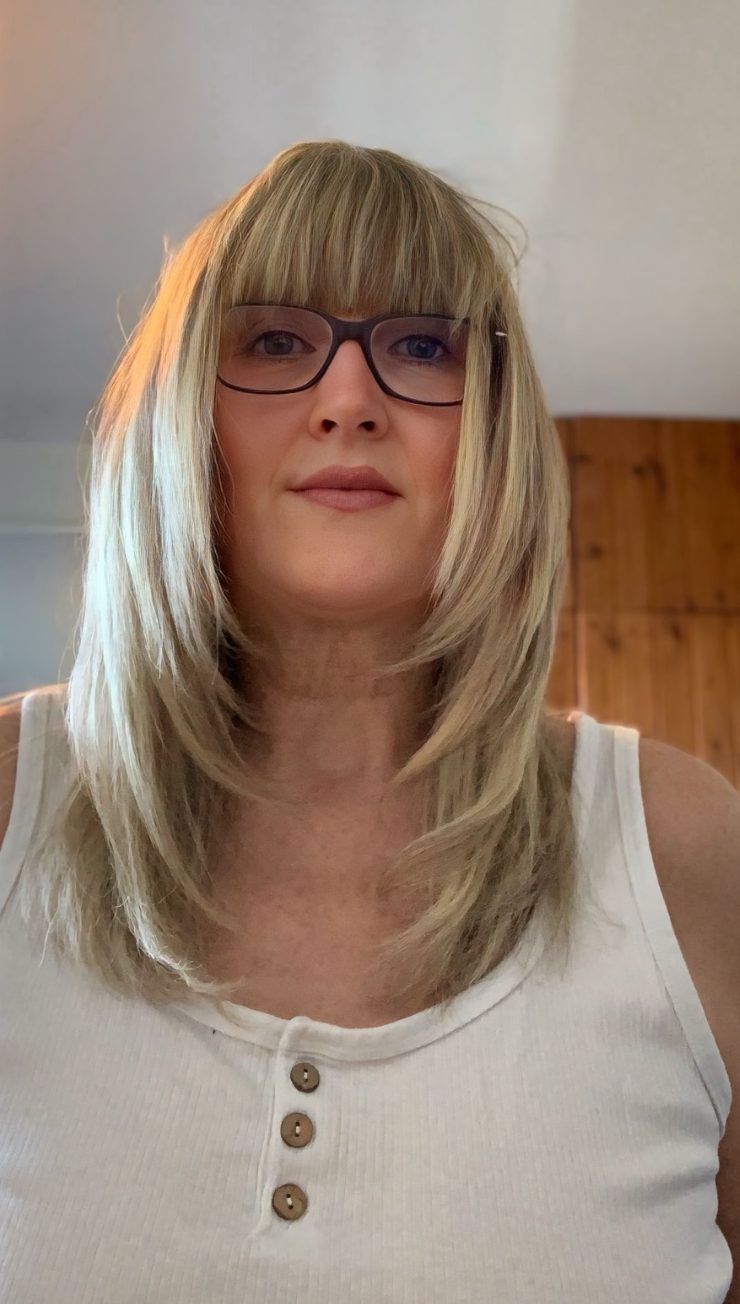
Dawn Drewett has worn many professional hats over the years. As the proud mother of 3 daughters, with a strong sense of resilience and adaptability. After 7 years of working as a receptionist in a leisure centre gym, Dawn made a bold career change at the age of 55 during the height of the Covid-19 pandemic. For the past 6 years, she’s been dedicated to supporting others through her work as a donor carer for the National Health Service’s Blood and Transplant team and as a phlebotomist for the NHS and General Practice Alliance. Her transition into phlebotomy was initially really daunting, and at first, she was very nervous about making the move, but as someone who learned how to embrace new challenges over the years, she now loves making a meaningful difference in people’s lives. Dawn was recently honoured to receive a King’s College Hospital Quarterly award in recognition of her dedication to her patients and colleagues.
👍🏻 Did You Enjoy This Episode? Please Let Us Know!
- Review: I’d also love for you to leave a positive review and rating for the podcast on Apple Podcasts, which helps my show reach more people who want to relaunch their careers.
- Follow: Be sure to follow the Career Relaunch® podcast on Apple Podcasts, Spotify, Amazon Music, or Android so you can automatically get each new episode on your device. Full instructions.
- Stay in touch: Follow the Career Relaunch® podcast on Facebook and LinkedIn. You can also follow host Joseph on LinkedIn, Instagram, Medium, YouTube, Facebook, Threads, and Bluesky.
💬 Comments, Suggestions, or Questions?
If you have any lingering thoughts, questions, or topics you would like covered on future episodes, record a voicemail for me right here. I LOVE hearing from listeners!
Leave Joseph a Voicemail
You can also leave a comment below. Thanks!
🙏🏻 Thanks to ALPAKA for Supporting Career Relaunch
If you’re looking for a way to keep all your travel essentials organized during your work commute, ALPAKA offers sleek, versatile accessories that are functional, eco-friendly, and built to last. I own plenty of their slings, totes, and pouches myself, made of recycled, technical fabrics perfect for protecting my gear, especially when it’s raining, as it often does in London.
Get $10 off YOUR first ALPAKA order by visiting CAREERRELAUNCH.NET/ALPAKA
📄 Episode Transcript
[00:04:01] Joseph: So this is the first time I’ve actually had somebody on the podcast whom I met in the neighborhood where I live, which is Beckenham, and I should probably explain how we met. I was actually getting my blood drawn, just like a routine blood draw down the street. And you were the phlebotomist who drew my blood. And we started chatting, and you had an interesting background. And that’s how we are here together today. So thanks for taking time out of your busy day. I’d love to hear, first of all, just what you’ve been focused on in your career and your life right now. What’s been keeping you busy?
[00:04:33] Dawn: Well, obviously, work has been keeping me busy since I joined that. My main focus has been on perfecting my skills because I have no medical background training. So for me, when I took this job, I was like, oh my goodness, what am I going to be able to offer? I’ve got no medical background. Are they ever going to accept me? It was a challenge as to what I was going to be able to offer. So when I did start, the very first time I took blood, I went out in the back room and cried because it was such an emotional experience, because I didn’t know who knows whether they can take blood. When I applied for this job, because I didn’t have any background in medicine, I wondered what the training was going to be like. I wondered if I could do it, I wondered if I was clever enough to do it, because I left school with no qualifications. So I thought, how am I going to fit into this role? What am I going to be able to do or not do? So the very first, my question in one of the training rooms was, how do we know if we’re suitable for this job? How do I know if I can do this job? And what if I put the needle in somebody and I don’t like the feeling of it going in or I faint? Yeah. And then the guy said to me, then it’s not the job for you.
[00:05:59] Joseph: Probably not if you’re a phlebotomist.
[00:06:02] Dawn: Simple as that. But you don’t know as much as I thought I could do the job. And I’ve always thought I’d love to do that. I’d love to be a phlebotomist. How do you know if you’re cut out for it? But because I saw the job advertised and I had to give up my job to be able to do this job, I was thinking, there’s no tryout, you know. You couldn’t say to them, look, let me see if I can do a needle first before I give my notice in my job. Let me see if I can perform for phlebotomy. You can’t do that. So you have to take this risk.
[00:06:36] Joseph: Just to set some context here also. You mentioned having some doubts about making this move, and I want to get into this whole journey of how you ended up here eventually, but you made this change when you were 55. Yes. During the COVID-19 pandemic. So this wasn’t something that just started when you were a young, young individual. This is something that came along later in your life. And so I want to hear all about that journey. But before we do that, I’d love to go back in time because I know you haven’t always been a phlebotomist. Dawn, can you tell me a little bit about how your career started? And I know you alluded to this a moment ago, is that you actually left school, and maybe we could start there and move forward from there.
[00:07:15] Dawn: I left school, as I say, I didn’t enjoy school. Didn’t. I think some people thrive in school. I didn’t. I wasn’t very academic. I could do things. If you showed me how to do something, I was better with my hands. So showing me how to do things was better for me than learning on a piece of paper. So I left school. I was 15 when I left school, so I didn’t even turn up to do my exams. I just sort of left school at 15, which you could back in them days. And I got my first. My first job was in McDonald’s.
[00:07:47] Joseph: Yeah. What were you doing at McDonald’s? I know you mentioned that when we chatted before.
[00:07:50] Dawn: Yeah, I just working on the counter. They give you different sections to work on whether you’re cooking the burgers. But being a vegetarian, cooking burgers and me didn’t go together. Oh, wow. I didn’t last too long in the job.
[00:08:03] Joseph: How long were you at McDonald’s? Out of curiosity?
[00:08:06] Dawn: About 18 months. While I was there, one of the managers left there, got another job in another restaurant, and he took me with him to the other restaurant. I ended up working there, and for a while I did different restaurants. So I sort of was settling into that role of working in different restaurants. But all throughout my life, I’ve had various careers from working in restaurants to having cleaning jobs, to working in laundries, to working in a driving school.
[00:08:40] Joseph: What was that like for you being at McDonald’s? And I suppose what’s behind that question is, I know that some people, I guess stereotypically McDonald’s would be maybe somebody’s first job. Coincidentally, my father, when he moved from Taiwan and immigrated to North America, one of his first jobs was working part-time at McDonald’s. He didn’t do it for that long, as was the case with you. Yeah. What’s that like being in there and working behind the counter and working with customers, and what was running through your head while you were there working at McDonald’s?
[00:09:10] Dawn: I knew it wasn’t going to be what I wanted to do, obviously forever. It was when you first leave school and you leave school with no qualifications. The fact that I was so pleased that somebody gave me a job without any qualifications was a huge bonus for me, but it showed me there that also, I know it sounds awful, but you almost like get looked down upon as well.
[00:09:31] Joseph: That’s kind of what I’m getting at that it’s kind of like stereotypically like job at McDonald’s. Fair or not, people don’t think that highly of it. I don’t think that’s completely fair. But that’s kind of the perception out. Yeah.
[00:09:42] Dawn: And that’s how they made you feel. You start questioning yourself. You start thinking, well, this can’t be it. There’s got to be better things. So in a way, it did me good because it did give me that drive to get something better, to do something more, to experience different jobs. And because I was 16 at the time when I first got that job, I think I was probably 17 when I left there. And I went with this manager to another restaurant that was called Green Pastures up in Saint Paul’s. So it almost like went from a fast-food restaurant to a more posher restaurant, which was in Saint Paul’s Cathedral. And, and again, even there, it doesn’t matter which restaurant you go to, there’s a certain you have to act a certain way. You know, your customer’s always right. So you learn to put on this persona of always being happy, always being accommodating. And I think that taught me a lot to be able to be very tolerant of a lot of people.
[00:10:39] Joseph: I’ll bet. Yeah. I’ll bet you see the best and the worst of them. Maybe the worst. Yeah, I know you said you bounced around with a few different jobs. At what point did you decide that you wanted to do something a little bit more stable, or was that even entering in your mind at that point?
[00:10:56] Dawn: No, I never thought. What do you want to do in my life? I just literally bounced from job to job to job. And then when I was 21, I met a man, fell pregnant. So at 21, I was pregnant. I had my child. And then again, you get fitted into stereotypical jobs so you can only. I wanted to work. I didn’t just want to, you know. Oh yeah, I’m working. I’m not earning. I wanted to be able to earn. So you go on to jobs that fit around your children then. So I found a job doing a sandwich round because it was ideal time. People want to buy sandwiches from 9:00, 10:00. Thinking, right, I need to get it at this time for my lunch. And then I was finished by two.
[00:11:41] Joseph: What is a sandwich round for those people who aren’t familiar? I think I know what that is, but what does that involve?
[00:11:46] Dawn: It’s me picking sandwiches up from a building and going around in my car, going around to different offices and selling them sandwiches and all sorts, crisps, drinks, cakes, things like that. So I had these big baskets on wheels that I used to take around to the offices, and I used to have like a bell that sandwiches and everybody would come out and they would buy their sandwiches again. But it was the hours that fitted in because it was nine until two. So I was able to take my children to school, fit in my job, be home in time to pick them up. And also when you had childcare issues, it wasn’t long for friends, family to be able to look after them so they could also fit it in with their day.
[00:12:31] Joseph: I’d be kind of trying to figure out how best to ask this question, because I don’t want to come across the wrong way, but I have had plenty of part-time jobs where I’ve waited tables. I have worked in a retail store, folding clothes. I have done what I would describe to be probably like temporary, more like blue-collar types of jobs. And what I found when I was in those roles is, I think you alluded to this earlier, is that some people kind of look down on that kind of stuff. Like, I don’t know why. I think most of it comes from the white-collar people out there who work in offices or feel like on paper they’ve got like fancier jobs or more esteemed roles. I thought about that, and I’m just wondering, did that ever cross your mind? Was that an issue for you or were you were you kind of thinking, well, this is just a job and you weren’t really thinking about maybe how others might perceive it?
[00:13:20] Dawn: It wasn’t an issue. But I did think about it because you’re made to feel that way as well. So even the jobs, the part-time jobs that I did, some of the people that worked in the offices, the way they treated you a lot of time, I’m very chatty. So I was chatting to everybody, and I think that’s why the job very suited me as well, because I would talk to everybody and even some of the girls and the guys that came across as like, they were better than me because they.
[00:13:47] Joseph: Had better jobs.
[00:13:48] Dawn: To pay. I have a mission in life where if somebody does look at me like that, I aim to become their friend because then they get to see me. They don’t get to see this job role. They don’t get to see, oh, you know, I’m better than her. This, you know, they get to know me. So I made a point of talking to all these people that are buying sandwiches from me. So sometimes even coming out to buy sandwich, it would be their way of getting away from the desk or their work for five or ten minutes. So you get to know them. So you’re going in there every single day. So, you know, it started off as little things, you know, oh, you look really nice. I really like that dress. Where’d you get that from or how are you today? Oh, your hair looks nice. Your makeup looks nice. I love that suit. Where’d you get that tie? All these people will talk to you about themselves more easily than you know. I didn’t know anything about their jobs. I couldn’t get into conversation because I didn’t have a clue. But you can talk to somebody about themselves, and they got that connection with you then because they don’t mind talking about themselves. And then they begin reiterating your questions. They asked you about yourself. They asked you how your day’s been. And so you get that rapport with them in the end. And then by the time I left, they were buying me gifts when I left. And yeah, it was lovely when I said to them, I’m leaving because from the sandwich round, I ended up getting a job in a leisure center, which was the job before this. But before then I’ve had all sorts of different jobs. But in every job, I’ve always said that if there’s one person that makes me feel like that, I will make sure I get to know them first and they get to know me. They can have their opinion after that, but I want them to get to know me before they judge.
[00:15:29] Joseph: Yeah, that’s a great way of thinking about it. It’s a nice way to disarm this sort of premature judgment that lands on you just because you’re working in a particular job. I’ve always really struggled with people coming to such quick judgments about people who are in name, whatever job it might be, whether it’s a white-collar or blue-collar job. And one of the things that I’ve found over time is that people are so much more than just their job title or their job. They may be in a job for all sorts of reasons that serve another priority in their life. And these days, I don’t put a lot of weight in people’s job titles or what they’re doing. And I actually, I mean, having worked in some jobs myself where I kind of felt the judgment of other people, whether it was like working as a retail person at Best Buy or folding clothes for Banana Republic. Like sometimes I these days make a point to be extra nice to people who are working in these part-time jobs or retail jobs, because I know what it’s like to be in that.
[00:16:22] Dawn: In that role.
[00:16:23] Joseph: I’ve never felt like it’s right to think that you’re better than somebody else, just because you’ve got a certain job and they’ve got a different job. Like there’s all sorts of factors that play into that.
[00:16:32] Dawn: So yeah, there is, there is a lot of these people that do have these part-time jobs. They’re busy, you know, studying and this and.
[00:16:39] Joseph: They.
[00:16:39] Dawn: Want to become all sorts of things. So yeah.
[00:16:41] Joseph: Got another agenda. Yeah.
[00:16:42] Dawn: Right. I think it has changed. I definitely think it has changed the roles. More people are going to uni now. So I think it is for them. It’s a way of, you know, supporting their university fees. It’s the way. So I think it definitely has changed from when I first started working there.
[00:16:57] Joseph: All right. Well, I’d love to shift gears here and talk a little bit about your chapter as a receptionist. I know you mentioned you work at a leisure center. I know you would eventually work at the front desk for the police. And could you just give me an overview of what this particular chapter was like for you? Just being a receptionist in general, what that experience was like.
[00:17:18] Dawn: So while I was a single mom, when I had children, because I had my eldest daughter, she’ll be 40 this year. And then later on in life, 12 years later, I met somebody else who went on to have two more children. So it was when I had them, I realized that from my first born, if you don’t keep your hand in with work, computers and everything change so much. And I didn’t want to have two more children, not work for a few years and then go back into it without any knowledge of what’s happened over the last three to four years. So I decided to do some voluntary work, and one of them was for the police, and it was working on the front counter in Beckenham Police Station, which is now closed. And I thoroughly loved working in there. So it was dealing with just silly things, like somebody that brought in a lost dog that was following him home and somebody had, you know, called him because they saw something suspicious or people used to bring in their license if they’d been naughty and speeding. So they had to come and do the producer. So we were doing work like this until somebody who was quite high in the police said, oh, no, I don’t think volunteers should be doing this sort of work because we don’t have, you know, clearance or access. So they stopped us doing from certain things.
[00:18:39] Dawn: So in the end, I just found myself sitting at the desk, not really doing much there. And I thought, well, if I’m working with the police, surely there’s something I could do. You know, they’re always inundated and everybody knows that police work is a lot of paperwork. So I thought, you know, there’s got to be something in here that I can do to help, you know. So I went up to one of these guys. I said, look, I’ve got all these hours from Monday to Friday from 9:30 till 3:30. Where can you use me? What can you do? I ended up becoming a drug stooge where they would hide drugs on my person. We would go to places like there’s the Glades shopping center in Bromley. Yeah. So we used to do that. And then I went on to do explosive stooging, where we used to walk in the airport with something in the suitcases that the dogs had to find. Yeah, and I did that for seven years. And then one of the guys who I worked with said, Dawn, you’ve been doing this for seven years and you’re not getting paid. Why don’t you look for a job within the police that you could get paid for? So he put my name down for something called Victim Support. So I went for an interview with them, and I got the job and I was working with them.
[00:19:55] Joseph: What were some of the key skills that you felt like you developed when you were working with victims?
[00:20:01] Dawn: So it was more the paperwork side. So we used to work with a lot of domestic violence victims and victims of burglary and things like this. So I was on more the paperwork side. All the other jobs I had before then were, I don’t know if anybody could have done those jobs. You know, I didn’t need any qualifications to do the job that I did. And even this job, I think it was because I was working for the police for seven years and I got in, but it showed me that I wanted something extra. I wanted something more to do, something to help people. And I think that’s where I learned something about myself, that I wanted to do something to help it because I enjoyed doing that, hearing the stories when I worked in there and how the people helped these victims, it was so meaningful, it was so uplifting, and it was nice to have received this feedback that they gave us, that if it wasn’t for the victims, which is a charity, by the way, they’re not funded by anybody. It is charity. So it’s that’s why my job ended because their funding won out. So they had to let me go.
[00:21:07] Joseph: So when you’re in these roles as like office, administrative support, receptionist, secretary, I guess you can use whatever label you want here, but you’re essentially doing administrative support for these people in kind of like an office, I guess, sort of setting where you’re working at a front desk or something. What do you think are the misconceptions people have about, I’m just going to use the broad term receptionists or secretaries out there. Having been on that side of things, as someone who has worked in various roles.
[00:21:39] Dawn: I do think that you’re not educated, and to be honest, I wasn’t. But it’s not that we can’t do it. It’s the situations that we find ourselves in. Like, even with the reception job that I did in the leisure center, for me, it was all about the hours and fitting it around my children. Now, I worked in the leisure center in the evening so that I could see my girls during the day. I could put them to bed, I could do their dinner, and then I used to go to work in the evening. So it worked. So for me, they do look at people in those sort of roles as, I don’t know, like menial roles. That’s how it came across. And like I say, even in the restaurant where they say the customer is always right. That’s exactly how they feel. Even in reception work, because you are dealing with the public. And if I don’t know, they came in and their class was full and you said, I’m really sorry, I can’t sign you into this class. It’s full tonight. What do you mean? Well, I come here every week. Why are you telling, you know. And it’s straight away.
[00:22:38] Joseph: I’ve seen people get really angry over there for some reason.
[00:22:41] Dawn: I just have a word with the teacher. They’ll let them in because I come here every week and I’m saying, look, I really like, you know, due to health and safety. Don’t give me health and safety. And it’s all this, you know, it’s.
[00:22:49] Joseph: Oh, you’re on the front lines. They’re dealing with angry customers. Yeah, exactly.
[00:22:53] Dawn: You’re all on the front line. So and that’s who again, you are taught that because you are on the front line, you are going to get all the flak. You are going to get all the people that are angry and not satisfied. And but again, if you can turn them around, this is what I used to like to do. I used to like to turn them around from being angry. And then when they’re leaving saying, look, I’m really sorry. You know, I was out of order. Thank you. And then I’d I think, yeah, I’ve done a good job.
[00:23:19] Joseph: Like I said before, I try to make a special effort to be especially nice to people who are customer facing, whether it’s like somebody at the airline check-in or somebody at a leisure center who’s working at the front desk or somebody who’s a secretary or receptionist, just because I feel like you are dealing with so much incoming. And whenever I see people, they’re just being mean to these people. And I don’t know. Yeah, people being mean to the secretaries of the front door receptionists. And so I don’t know why that is, but I do feel like it’s important to treat those people with respect and remember that for the reasons that you just mentioned, that there’s a whole host of reasons why people are in all sorts of jobs and to not think too highly of yourself.
[00:24:01] Dawn: No.
[00:24:02] Joseph: It’s amazing how a thank you or just an acknowledgment can really just do wonders for somebody.
[00:24:09] Dawn: Yes. And I’ve learned that again from being reception, being on front of house. It’s how people treat me as to how my day goes.
[00:24:18] Joseph: Absolutely. Let’s talk now about the most recent transition, which you alluded to at the beginning of our conversation. So for the past six years, you have been working as a phlebotomist, and I would love to hear about how you switched from moving and working in the police department to then eventually transitioning to becoming a phlebotomist.
[00:24:40] Dawn: So when I was working in the police, I had a friend who I hadn’t been in contact with for years, and my daughter happened to see her out shopping and we got in contact and she happened to work at the leisure center. So she said, we’re always looking for staff here. So she got me the job there, and I was there for about two to three years as a receptionist. I was just doing, as I say, evenings because that’s what fitted in around my girls. And then I got offered another job within my time to do the office work. But during the day. So I was working in the office during the day. But then also I kept the evening shift going as well. So I was working during the day in the office, and then a couple of nights a week, I was working as a receptionist in the evenings. And yeah, I did that for seven to eight years. And then COVID hit, and the leisure center was one of the first places that closed down. I was like, well, where does that leave my job? You know, a receptionist, I couldn’t go in. It turned into this call center, and I didn’t really want to be in a call center. It wasn’t the job that I’d applied for wasn’t the job that I was in. I didn’t enjoy it because I was working from home in my own bedroom. It’s a very lonely. I don’t know how people work from home. It’s very lonely. I’m a social person. I like people around me.
[00:26:27] Joseph: Before we get to your transition to phlebotomy. So I guess we’ve all had experiences being on the receiving end of people calling you and plenty of people called into call centers. Can you give me a sense of like, how many calls are you fielding each day? How many people are you talking to when you’re working in the call center role?
[00:26:41] Dawn: So you’re literally working from 9 to 5, the phones constantly, but it’s more at that time, complaints. We were taking people’s mandates with their direct debits every month, but they were closed. And they said, well, why are you taking this? So again, it was trying to get their refund sorted out for them. And so that got me very disorientated with the whole thing.
[00:27:07] Joseph: Dealing with people’s complaints all day. What has this taught you in general about people?
[00:27:14] Dawn: An honest answer. Yeah.
[00:27:16] Joseph: Let’s be honest.
[00:27:17] Dawn: I don’t think you can please everybody all of the time. Some of the things that I did, I got immense praise from. Oh yeah. Thank you very much for your help. Thank you for this. And other times people were so angry and they don’t want to or they want to do is play golf or go to their class. They don’t want excuses. They don’t want to hear the word no. They want fixes. They want you to say, okay, I’ve done this. You can now play golf. If you say no for any reason or you’re not giving them the answer they expect you to give, they’re not going to be happy. It doesn’t matter how nice to them you are. I learned to apologize a lot.
[00:27:52] Joseph: That’s a tough job. Okay, so just to finish up here, the switch to phlebotomy then. So you had a friend and she mentioned there might be an opportunity. And then what did you do to open the doors to eventually working in phlebotomy?
[00:28:05] Dawn: Years ago, probably about 20 years ago, I’d looked into doing phlebotomy, so I phoned up Greenwich University and said, look, I understand that you teach phlebotomy. Can I enroll? And you know, how much does it cost? And I was going to pay for it myself. And they said to me, do you have a placement to go to afterwards? And I said, no. And they said, to be honest, if you learn this and you pay out this money and you don’t get anything within a certain amount of months and you’re not doing any needling, then you’re going to have to pay for the course again, because everything we teach you, you’re going to have forgotten by then, or they won’t employ you without a certain amount of months experience. So I realized that I was going around in circles. Nobody would give me a job without the experience, but I couldn’t gain the experience without having somewhere to go once I’d got that experience. So I probably tried different ways. I went around to hospitals asking, would they give me a placement if I was to pay for the phlebotomy course myself? They were all saying, no, they wouldn’t do that. So I gave up. I gave up that idea. So when I saw a job advertised, it was for a donor carer.
[00:29:12] Dawn: So it was for the NHS, but it was for NHS BT, which is where you go and donate blood. But because it was COVID, they wanted men to donate plasma because men had the highest antibodies in their plasma. So they were asking for donor carers and they were going to give us free training and they were going to employ us. And it was initially only going to be for three months. So they said they were going to give us a training employers for three months. And I began thinking, well, it’s something that I’ve always wanted to do. It’s only going to be three months. What am I going to do after that? But the job was really getting to me by then being at home doing this. And I thought, you know what, let’s just go for this. Let’s see if I even get the interview stage. I didn’t think I was going to get to the interview stage because I’ve got no medical background whatsoever. So I applied for it. I had the interview. They told me at the end of interview, yep, you’ve got the job. Which I was surprised about because I was absolutely rubbish.
[00:30:17] Dawn: I probably waffled like I am doing now. But then I didn’t hear anything for a couple of months. So I was thinking, have I got the job? Have I not? But it takes a long time to get into the NHS. So I found out since working for them. You know, all the background checks, all the. You have to have a DBS check. You have to do all sorts of checks to be able to get in there. But then once I did get in there, they gave me all this information that I had to learn. And again, I haven’t learned since I was in school and not being very academic. I thought I’d made the biggest mistake because by now I’d given my notice in for a job that I’d been in for seven to eight years, and I’m now having to learn something that is totally alien to me. And I kept saying to my partner, I had my meltdowns and I said, I can’t do this. I don’t know what I’m doing. This is not for me. I, you know, I nothing’s sinking in nothing. You know, I’m not very good at learning. How am I going to teach myself this? And lots of self-doubt.
[00:31:14] Joseph: How did you get over that?
[00:31:16] Dawn: I kept reminding myself, it’s either this or I go back to the jobs that I had been doing, or I didn’t get respect jobs that I didn’t feel respected in. And this job was something that I would have felt I earned, not just fell into. I did learn I had to go to Birmingham a few times to go and do the training, which again, was out of my comfort zone because I don’t like motorway driving. But I drove to Birmingham, stayed the night again, which is not me. I don’t like staying away from my home, so everything I was doing was out of my comfort zone. But I did start learning. I surprised myself because it wasn’t as daunting as I thought it was. It still was even now. It’s like any job you do, you go into that job and you’re the new person. You know, I’ve left the job that I knew what I was doing and I felt confident in, and I went in there every day and didn’t even think about it. To be in this new person didn’t have a clue what I was doing, didn’t even know if I could do it. You know, until you do your very first needle, you don’t know how you’re going to react. You’re practicing on this plastic arm that has got juice in it, which is so easy to do on a plastic arm because the veins are huge. You don’t get to practice on each other or a real person. So I didn’t know if I was going to do it. And again, this is what I said to my partner. Supposing I’m doing all this learning, I’ve given up a job. If I put the needle in and I faint, how is that going to work for it? You know this obviously I didn’t know how I was going to react. I didn’t think I was going to faint or anything like that, otherwise I wouldn’t have gone for it in the first place. But you just don’t know how your body is going to react in a situation.
[00:33:02] Joseph: And what was it like for you to do the first blood draw? Do you remember that moment?
[00:33:06] Dawn: I remember it like it was yesterday. My hands were shaking so much, which is not good when you’ve got to pull a needle in somebody’s arm.
[00:33:12] Joseph: Definitely. Yeah.
[00:33:14] Dawn: But the trainer I had was the best trainer I think I’ve ever had. She was so full of praise. She was so upbeat. And you’ve got this, you know, this, you know, and she went through everything before. And I think the good thing about training in somewhere like the NHS or they always give you the easiest, most biggest veins to do your first needle. So your confidence builds from doing that. So, you know, the people that were coming in had huge veins. I did my first needle. I was so overwhelmed by it and elated that I’d actually done it. I didn’t faint. I knew I could do it, I knew that I’d made the right decision. That the minute I put that needle in. I knew I’d made that right choice. But it wasn’t up until then that I knew that it was the right choice.
[00:34:13] Joseph: Yeah, it’s interesting because I talked to so many people who are thinking about making a move, and there’s so much doubt and risk associated with career transitions. And until you’ve actually done it, you don’t really know if you’ve made the right decision. And wouldn’t it be nice if you could experience what it’s like so that you could know you’re doing the right thing?
[00:34:31] Dawn: I would love a trial, you know?
[00:34:33] Joseph: Yeah, exactly.
[00:34:34] Dawn: Come here for a week. Don’t leave your job, but come here for a week. Shadow us. Maybe do a needle. And then if you like it, then come and join. But there was nothing like that when I did my training. We had six weeks. They had to open up all these. There was almost like pop-up shops because it was a trial. They wanted to collect the plasma because the plasma had the highest antibodies. They wanted to see if that helped fight off COVID. As it happens, the trial didn’t work, but by then the job went from three months. It got extended to six months. It then got extended to a year, and then it got extended to another four months. I think it was about 14, 15 months experience that I had. I thought, I’ve got all this experience now. So when it came to an end, I thought, well, I’ve been doing needling. I’ve been doing, you know, blood donations. Where can I go with this now? So that opened up a huge, huge door, which is where I am today and being a phlebotomist. But when I left there, so I went round with my CV. So I just made a list of all the doctors in the area and all the hospitals, only to realize that I think after about handing out 15 to 20 of them, realize that actually people don’t do this anymore. You don’t go around handing out your CVs because it’s not the done thing. Every time I went in there, I’ve got like the door shut and saying, oh no, you know, you have to any jobs we advertise are going to be online. You need to look online. But I didn’t, I was just so excited, you know, thinking, oh yeah, I’ll just hand out my CV and I’ll get a job. But yes, it didn’t work like that.
[00:36:12] Joseph: And yet when we spoke last time, I think you did say that it did actually end up leading to something, right?
[00:36:18] Dawn: Yeah, it did it. So I went into a hospital in Bromley, into the Princess Royal, and I spoke to a lovely lady in outpatients, and she was the one that said to me, we are actually employing healthcare assistants. And I thought, what’s a healthcare assistant? I didn’t know what healthcare assistant was. And I told her what I did, and she happened to work for NHS BT as well. So she knew the training I had and she knew what I went through to get to where I was. So she said, oh yeah, they train you very well in there. They’re very thorough. It’s brilliant training. She said, I’d be very interested in working with you, so please apply online and I will look out for your CV. So she was the right person to speak to and she ended up being my boss.
[00:37:09] Joseph: I guess you never know how these things turn out. You never know when you’re just about to turn a corner, and whether the 50th or the 101st person is going to be the one that actually ends up tipping the scales for you and opening a door. So it sounds like your persistence ended up paying off in that case. I do have one final question about phlebotomy before we talk about some of the lessons you’ve learned along the way. So I think most people who’ve probably listened to this show have gotten their blood drawn at some point in their life. Is there anything in particular you wished people knew about the job of a phlebotomist that they perhaps just don’t understand? As someone now who’s been working in phlebotomy for a few years.
[00:37:52] Dawn: Sometimes people come in and they have bad experiences, so they’re very nervous when they come in because they’ve had a bad experience before. And they say, oh, you know, you can’t use this arm, you can’t use this vein, you can’t use this. And sometimes trying to not change their mind, but say, look, you know, I’ve been doing this for years. Can I have a look at your arm just so that I can see? But yeah, they’re very particular. Some people will not let you have a look at different arms. They want you to go in a certain arm, a certain vein. But yeah, sometimes I think I wish they just let you get on with doing your job.
[00:38:24] Joseph: Just let you do your job.
[00:38:26] Dawn: And yes.
[00:38:27] Joseph: Yeah, I generally just keep my mouth shut. Like I say, hi, I’m quite friendly. I just let them do it. I don’t want to distract them. I don’t mind needles, but I don’t love needles either, and I just let them carry on.
[00:38:39] Dawn: Some patients also say on the other side, some patients do know their bodies. They know their bodies well. They know what vein goes. And you listen to them. You get to know them very, very well. You know how to talk to them because we get also a lot of nervous patients and they get attached to one in particular. So when they come in, they’re under the perception that, oh no, I have to have that one for phlebotomist. Sometimes you have a phlebotomist feel like, oh, maybe I’m not good enough then. But they get that trust with that one. Is that getting trust in one doctor? You want to see one doctor because they get to know you rather than keep going into a center, seeing many different doctors and otherwise. That’s how they feel about phlebotomists.
[00:39:19] Joseph: Thank you for sharing that insight about what it’s like to work in phlebotomy. I’d love to finish up here by just asking you a few questions about some of the things you’ve learned along the way of your very interesting career change journey. I was looking back at your bio that you wrote and sent along to me. You mentioned to me that you have learned to embrace new challenges, but at first you were very nervous about making this move, and I’m just wondering if you had any perspectives on making moves. If somebody’s listening to this and they’re nervous about making a move and they’re not completely sure that they can do it, how would you recommend they approach the idea of a career challenge that they’re facing?
[00:40:02] Dawn: Any change is always going to be scary because it’s the change you don’t. Nobody likes to feel the new person. Nobody likes to feel out of control. And I think that’s what it is. You’re comfortable with a job, you feel in control. You know what you’re doing. You know that everything’s got its place and you know your routines. When you start a new job, you feel dumb again. You feel like you’re back in school and you don’t know anything you’re learning. But it’s okay to feel that way and it’s okay to not understand. Everybody feels the same when a new job. And I’ve learned that with challenges. Yes, I’m scared, I am scared, and I was scared. I was very much out of my comfort zone when I took this job. I didn’t think I was clever enough to ever do a job like this. And I remember the very first time putting on my uniform how proud I felt to wear that uniform. And I still feel like that to this day. I still love putting my uniform every day and feeling proud that I work for the NHS. It’s okay to be scared. There’s always a reason why you’re making that career change. With me, it’s I wanted a job that I felt respected in and I’ve got that. And I definitely feel respected in this job. And I think it’s the first job ever in my life that I felt respected, which is what has kept me going.
[00:41:18] Joseph: One of the things that you talk with me about when we first chatted, also Dawn, was this idea of having a career, and I know that you mentioned to me before that you left school and you didn’t quite feel like you had a, quote unquote, career.
[00:41:34] Dawn: No, I didn’t.
[00:41:36] Joseph: How are you feeling about that now? Would you still describe it in that way?
[00:41:42] Dawn: Now. I will stay here until I retire. I love my job. Absolutely love my job. Again, I’ve never had a job where every single day I look forward to going to work, which I’ve never had. All my previous jobs, I did it because I had to. I did it because I was earning. I had bills to pay. This. I love going to work. I love especially helping patients that are nervous. That’s what I thrive in. Helping patients that are nervous or neurodiverse. They handle things different. You need to be more assuring. It’s being able to get those patients through that to them, which is a traumatic experience. And if they come out there and I get a thanks and a smile at the end, that’s what it’s all about. Some people want to move up in their careers. They want to become a nurse. I don’t aspire to become a nurse. I feel I need to go up the bands. I’m happy at what I do now, very happy and I’ll be quite happy to doing this until the day I retire.
[00:42:41] Joseph: Now that’s great to hear. I do feel like there’s sometimes this implicit pressure that we feel either from society, or maybe it’s intrinsic to ourselves, that we have to be climbing some sort of a career ladder. We have to be progressing to the next role to secure a promotion, to become more senior. And actually, there’s something quite liberating and peaceful by just being happy with the role that you have. And it’s refreshing to hear that.
[00:43:09] Dawn: Yeah, we get our appraisals and they say to me, my appraisal. So where do you aspire to be in three years? I said, exactly where I am now. I don’t want to move. I just want to stay exactly doing what I’m doing. I don’t need the more money or anything else like that would that would come in handy. But you know. Yeah, yeah, I don’t need that big next step. I’ve found what I’ve been looking for.
[00:43:29] Joseph: And I feel like that’s what people want. Ultimately, it’s not even about the title or the salary or the prestige or the esteem of a job. It’s about just being happy with the job that you have. And that’s a good endgame right there.
[00:43:46] Dawn: It’s a very good endgame because you’re at work longer than you are at home with your partners. You’re there for ten hours a day. If you can be happy doing that, what else would you need?
[00:43:58] Joseph: Absolutely. Last question for you. What’s something that you’ve learned about yourself having successfully made this transition into phlebotomy, which sounds like something that you had had in the back of your mind?
[00:44:12] Dawn: I’ve learned that I can be adaptable, I can learn. I didn’t think I could because I had such an experience being at school. I just thought, I know I’m bad at learning. You know, I can’t do it. My brain doesn’t work this way, but it may take me longer. You know, my old boss. Bless her, I said to her, you may have to show me ten times, I said, but once I’ve got it, I’ve got it. And I said, no one let you down. And I kept asking her and kept asking her. And they know that with me now they know. They say, okay, Dawn, we’ll show you when you’ve got it. Just let us know. They were very, very patient with me. And I think that’s the thing with me. It just took me a bit longer. So I’ve learned that I can face new challenges. I can get over this. Oh, I can’t learn. It’s nice that my old boss took that time to give me that extra time to be able to show me and give me the time to be able to learn it at my pace, rather than what they wanted me to.
[00:45:03] Joseph: It sounds like you’ve found your happy place in your career, Dawn, and that’s really nice to hear. Thank you so much for telling me more about your life and your interesting career journey, and some insights on what it’s like to be a phlebotomist. And it’s not something that I think most of us maybe think about as much like this job of somebody taking our blood, but it’s such an important one and such an important service out there that you’re providing to people. So I appreciate you and thank you for doing a pretty clean blood draw of me a few weeks ago. Painless. Yeah. Thank you very much. Best of luck to you with your work. And perhaps we’ll bump into each other again.
[00:45:45] Dawn: You never know. But you know where I am. Need another blood draw? I’m there.
[00:45:49] Joseph: Thank you so much, Dawn.
[00:45:50] Dawn: Thank you very much for your time. Thank you.
🎶 Interview Segment Music Credits
- Jakob Ahlbom – Crossing the Rubicon
- Podington Bear – Infant
- Ever So Blue – Calme
- Podington Bear – Bountiful
- Lama House – Where Legends Dwell
- Podington Bear – Floating in Space
- Ecovillage – Unending Love
- Relaxing Corporate Ambient